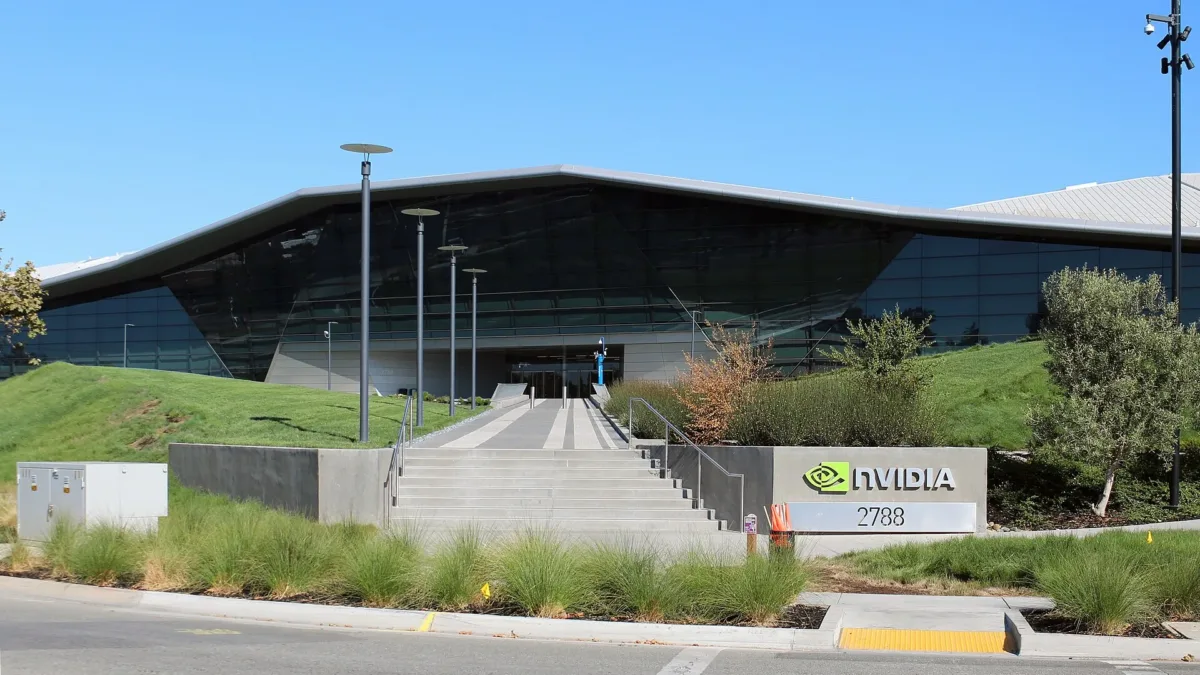
Nvidia Q3 results beat Wall Street on both revenue and profit, with the chipmaker reporting $115.8 billion in revenue for the quarter ended 25 October 2026 — up 103% from a year earlier and well above the roughly $109.1 billion analysts had expected, according to LSEG data cited by Reuters. It is the company’s first quarterly report since founder Jensen Huang resigned as chief executive on 12 November, and the first presented by interim chief executive Colette Kress.
Adjusted earnings per share came in at $2.68, against expectations of about $2.48, while GAAP earnings per share were $2.70. Net income rose 105% from a year ago to $65.3 billion. Gross margin was 74.8% on a GAAP basis and 74.9% on a non-GAAP basis, slightly above the 74% the company had guided in August.
The result also cleared Nvidia’s own guidance with room to spare. In August the company had told investors to expect revenue of $108 billion, plus or minus 2%, a range topping out at about $110.2 billion. The $115.8 billion it actually reported was about $7 billion above the Wall Street consensus.
01. Nvidia Q3 results driven by data centre sales of $107.6 billion
Data centre revenue, the business that decides how investors judge Nvidia, reached $107.6 billion — up 110% from a year earlier and 21% from the previous quarter. Edge computing revenue, which covers gaming, professional visualisation and automotive chips, was $8.2 billion, up 42% from a year ago.
The new Vera Rubin platform is now shipping. Nvidia said the Vera Rubin NVL72, its most advanced computing platform, has begun its fastest product ramp in the company’s history, with racks already running at CoreWeave, Google Cloud, Microsoft Azure, Oracle Cloud Infrastructure and Nebius, and coming online soon at SpaceXSI. Kress called the start “explosive” in the company’s statement.
“Our momentum is real. NVIDIA is an exceptional technology leader, powered by the relentless innovation of our people,” Kress said. “Vera Rubin is off to an explosive start, our roadmap is on track and our ambition has never been greater.”
The release also confirmed an agreement to acquire Hugging Face, the AI model platform, and expanded access for Anthropic to Nvidia’s Grace Blackwell and Vera Rubin capacity through cloud providers. Nvidia returned $28.1 billion to shareholders in the quarter through share repurchases and dividends, and said about $227.3 billion remained under its buyback authorisation. It will pay a quarterly dividend of $0.25 a share on 23 December 2026 to shareholders on record on 2 December.
02. Strong Q4 outlook lifts Nvidia shares after hours
Investors were watching the outlook as closely as the quarter itself, and that too came in ahead of expectations. Nvidia guided fourth-quarter revenue to $130.0 billion, plus or minus 3%, against an average analyst estimate of about $125.25 billion, according to LSEG data cited by Reuters. The fourth quarter is a 14-week quarter, one week longer than usual. Gross margins are expected at 71% to 72%, and the outlook assumes no data centre compute revenue from China.
Shares rose about 2% in early after-hours trading, according to GamesBeat, after a difficult month for the stock. Nvidia shares had fallen about 24% since the start of November before the report, as the leadership crisis added to wider worries about the health of the AI sector. The stock closed Tuesday’s regular session at $155.46, down 0.44% on the day.
The leadership question remains open. Kress, Nvidia’s chief financial officer since 2013, took over as interim chief executive when Huang resigned, and the board is considering internal and external candidates for the permanent job. Huang has since said he would consider returning as chief executive if the board asked him, as Newsy reported earlier. The earnings call, scheduled for 5 p.m. Eastern time on Tuesday, is expected to focus on the search for a permanent chief executive, on whether Vera Rubin demand can sustain the growth rate, and on the lower margin guidance for the fourth quarter.
For readers in India, the result matters well beyond Wall Street. Nvidia’s chips power the data centres behind the AI services used by Indian businesses and developers, and the company’s guidance is treated as the clearest single read on whether global AI spending is still growing. This quarter’s numbers say it is — at least through October. The open question now is what the next chief executive does with that momentum.