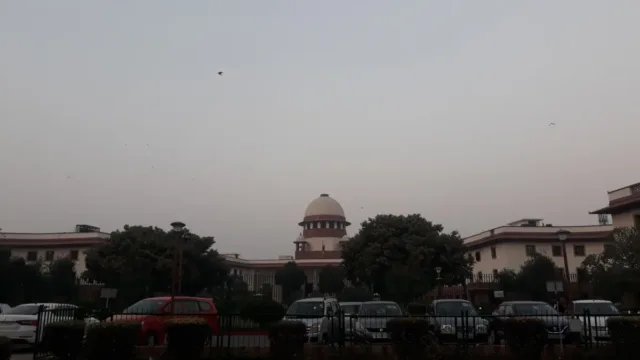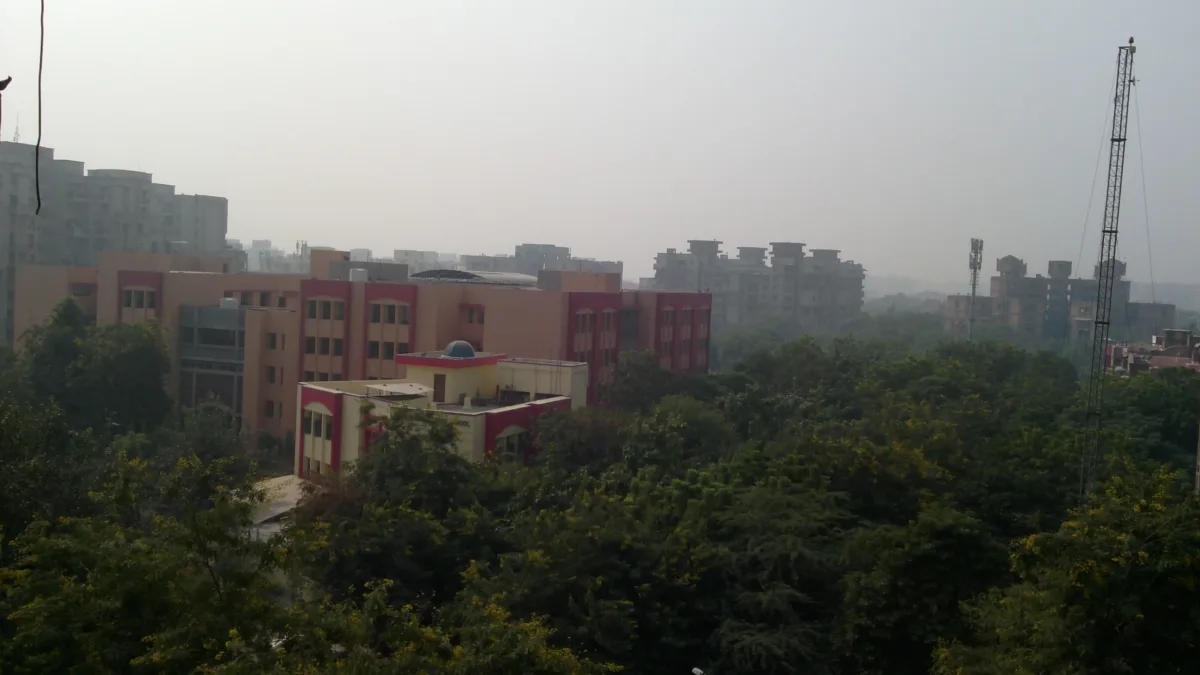
Delhi-NCR got a breather on Tuesday evening. The Commission for Air Quality Management (CAQM) revoked Stage III restrictions under the Graded Response Action Plan with immediate effect, after the capital’s daily average air quality index fell to 204. GRAP III revoked, then — but the air is still far from clean, and Stages I and II remain in force.
Announcing the decision, the CAQM sub-committee said it was revoking Stage III “as daily AQI shows a downward trend, reaching 204 today”, and that “all actions under GRAP Stages I & II and restrictions as per the order dt. 30.10.2026, shall remain in force.” The wording was quoted by NDTV and Times Now from the commission’s post on X.
01. GRAP III revoked: what changes now
Stage III is the “severe” tier of the graded plan, and it carried the toughest curbs short of a full emergency. With it lifted, the restrictions that go away include the ban on non-essential construction and demolition across NCR — excavation, earthwork, piling, drilling, demolition, road work and stone cutting among them — and the bar on BS-III petrol and BS-IV diesel four-wheelers in Delhi and the NCR districts of Gurugram, Faridabad, Sonipat, Ghaziabad and Gautam Buddh Nagar.
Diesel generator sets, banned under Stage III except for emergency and essential services, are also back in use. And the hybrid-schooling direction for classes up to Class 5 in Delhi and the named NCR districts, which left the choice between in-person and online classes to parents, no longer applies.
Stage III had been in force since 6 November, when CAQM invoked it after Delhi’s daily average AQI hit 382, in the “very poor” band. The commission acted pre-emptively, on forecasts from the India Meteorological Department and the Indian Institute of Tropical Meteorology that the air could slip into “severe”.
02. Why the air improved
The improvement has been steady rather than sudden. After the 382 reading on 6 November, Delhi stayed “very poor” through 11–14 November, then improved to a daily average of 290 on 15 November, 275 on 16 November and 204 on Tuesday, according to News18’s tracking of Central Pollution Control Board data.
Stronger northwesterly winds, reaching up to 15 km/h, and a mixing height of around 1,500 metres helped disperse pollutants, News18 reported, citing air-quality researchers. Light rainfall in parts of the region also helped. But 204 is still in the CPCB’s “poor” band (201–300) — well above safe levels — and of Delhi’s 58 monitoring stations on Tuesday, 31 were still “poor” and one, Siri Fort, was “very poor” at 303.
03. What stays in force
Delhi residents should not read the rollback as a return to normal. The preventive measures in CAQM’s 30 October order run until 20 November, including dust controls on construction and demolition sites and a cap of 50% physical attendance at government and private offices in Delhi and the five NCR districts, with the rest working from home. Construction sites shut down for violations cannot resume without a specific CAQM order.
The sub-committee said implementing agencies must intensify action and monitor strictly to prevent a slide back into “severe” or “severe plus”, and that it will keep reviewing the situation on the basis of AQI readings and weather forecasts. The forecast is not reassuring: the air is likely to stay “poor” to “very poor” in the coming days, according to the Economic Times.
For now, the message from the authorities is measured relief. The strictest curbs are gone, the trend is down, but Delhi’s air remains unhealthy and the next cold, still spell could bring the restrictions back. Read the Times of India report here, the Economic Times report here and NDTV’s report here. Delhi’s air had hit “severe” earlier this month — see our earlier report on Delhi becoming the world’s most polluted city.