Dubai is the most popular first international trip from India. The flight from Delhi takes under four hours, and four days is enough for the Burj Khalifa, the Dubai Mall, the Fountain, a dhow cruise on the Creek and a desert safari. This 4-day plan is for first-timers, with the visa rules up front.
Visa warning, November 2026: the visa-on-arrival rules for Indian passport holders changed in late 2026, and sources disagree about whether UK visas and residence permits still qualify. Check u.ae, the GDRFA-Dubai site or your airline before you travel.
Prices and timings below are ranges, not fixed figures. Check them before you travel, because fares, fees and hours change.
01. Visa rules for Indian passport holders
An ordinary Indian passport alone gets neither visa-free entry nor visa on arrival in the UAE. Most Indian travellers need a pre-arranged visit visa before they fly. Apply through your airline, such as Emirates, flydubai, IndiGo or Air India, through a hotel, a travel agent, or the UAE’s official channels at u.ae, the ICP or GDRFA-Dubai. Indicative agent prices are about AED 400 (around ₹10,400) for a 30-day single-entry visa and about AED 600 (around ₹15,500) for a 60-day single-entry visa. That is a range from one agent source, so confirm the price before you book.
Visa on arrival, for some travellers only: Indian passport holders can get a visa on arrival only if they also hold a valid US visa or green card, or a residence permit from the UK, an EU country, Australia, Canada, Japan, New Zealand, Singapore or South Korea. Your passport and the qualifying document must each be valid for at least 6 months. The visa is valid for 14 days and can be extended once by 14 days. The fee is AED 100 for the 14-day visa and AED 250 for the extension. A 60-day single-entry visa on arrival costs AED 250 and cannot be extended.
The UK question: a report from 1 November 2026 says that under updated 2026 UAE rules, Indian travellers relying only on a UK visa or UK residence permit are no longer eligible for visa on arrival and must apply in advance, while US, EU, Australian, Canadian, Japanese, New Zealand, Singaporean and South Korean documents still qualify. Older sources still list the UK as qualifying. This is not settled, so do not plan your trip on UK eligibility. Check u.ae or GDRFA-Dubai, or ask your airline, before you fly.
02. How to reach Dubai from India
By air: Delhi to Dubai is a nonstop flight of about 3.5 to 4 hours, covering about 2,200 km. Mumbai to Dubai takes about 3 hours 12 minutes. Emirates, flydubai, Air India, IndiGo and SpiceJet fly the route. Dubai is 1 hour 30 minutes behind Indian time. Get your visa before you book a non-refundable ticket.
03. Best time to visit Dubai
November to March is the best time, with comfortable temperatures of about 20 to 30°C. It is also the peak season, so hotel prices are at their highest. The Dubai Shopping Festival usually runs in late December and January. June to August is the hottest time, at 40 to 45°C or more, with the cheapest hotels and mostly indoor sightseeing. In summer, plan outdoor time for the early morning or after sunset.
04. Day 1: Downtown Dubai — Burj Khalifa, Dubai Mall and the Fountain
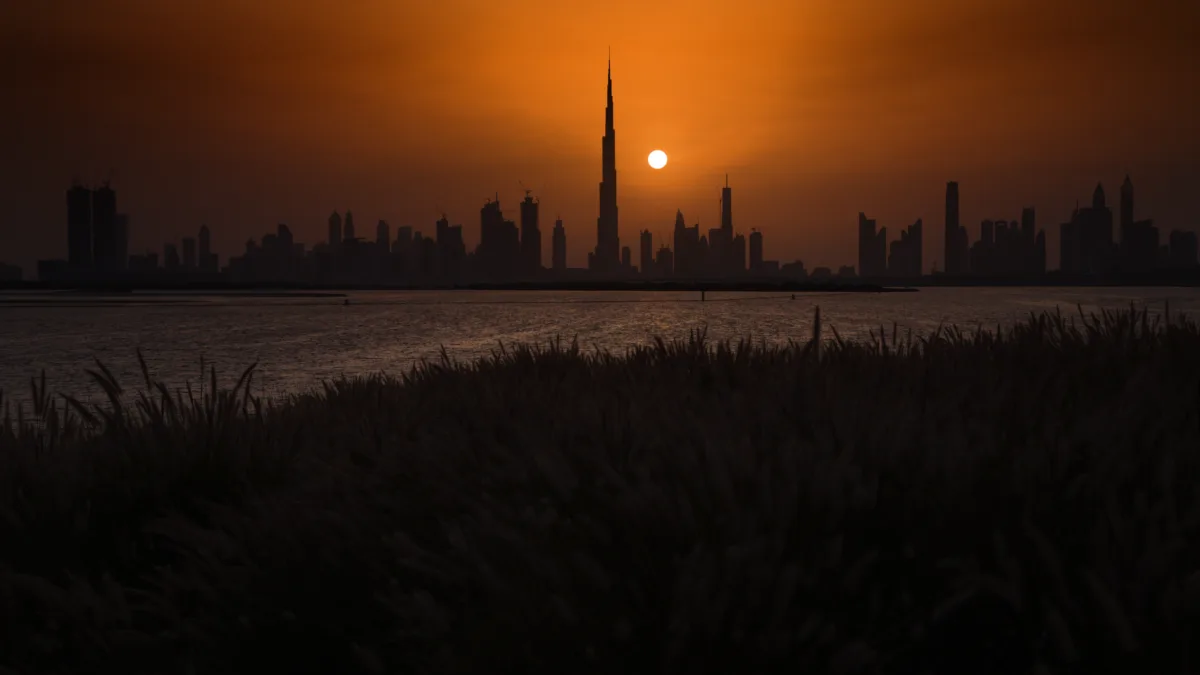
Afternoon — Burj Khalifa. The Burj Khalifa is 828 metres tall, the tallest building in the world. At the Top, on Levels 124 and 125, costs from about AED 169 to 189 per adult outside the sunset hours. Sunset slots, from about 4 to 7 PM, cost about AED 219 to 244. At the Top SKY, on Level 148, costs about AED 379 to 399, and The Lounge, on Levels 152 to 154, costs about AED 599 to 769. Children under 3 go free. The attraction is open roughly from 10 AM to midnight, and from 8 AM on Fridays and Saturdays, with last entry at about 11 PM. Hours vary by season, so check ticket.atthetop.ae for your date. Book online in advance, because sunset slots sell out.
Evening — Dubai Mall and the Dubai Fountain. Dubai Mall stands at the foot of the Burj Khalifa and is reached from the Burj Khalifa/Dubai Mall metro station on the Red Line. The Dubai Fountain is free to watch from the promenade. Evening shows run every 30 minutes from 6 to 11 PM, and afternoon shows run at 1 and 1:30 PM from Saturday to Thursday and at 2 and 2:30 PM on Fridays. The shows were paused for renovation during 2026 and resumed in late October 2026, so check that they are running on the day you visit.
05. Day 2: Old Dubai — the Creek, the souks and a dhow cruise
Morning — Deira and Bur Dubai. Cross the Creek and explore the old city. The Gold Souk and the Spice Souk in Deira are the classic stops, and the Al Fahidi quarter in Bur Dubai has wind-tower buildings and narrow lanes. Traditional abra ferries still cross the Creek for AED 1.
Evening — dhow cruise. A dhow cruise is a traditional wooden boat sailing for about 1.5 to 2 hours in the evening, with a buffet dinner and live entertainment. Creek cruises cost about AED 45 to 180 per person, and Marina cruises about AED 75 to 250. The Creek route passes the souks, Al Fahidi and the wind towers. The Marina route passes the modern skyline and Palm Jumeirah. Most cruises include hotel pickup and drop-off. Check what is included before you book.
06. Day 3: Jumeirah Beach and Dubai Marina
Morning — Jumeirah Beach and JBR. Jumeirah Beach and JBR Beach are public beaches and free to enter. JBR, the Jumeirah Beach Residence, has the beach, The Walk promenade, restaurants and shops. Go early in the morning in summer, and use the beach in the late afternoon in winter.
Afternoon — Palm Jumeirah and Dubai Marina. Palm Jumeirah is the palm-shaped island, home to Atlantis, and is best seen from a Marina dhow cruise or from JBR. Check current prices before you pay for a Palm tour or an Atlantis ticket. In the evening, walk the Marina promenade, when the towers light up and the restaurants open.
07. Day 4: Desert safari and departure
Afternoon — desert safari. A shared evening desert safari, with dune bashing, a camp dinner and shows, costs about AED 79 to 240 per person. A morning safari costs about AED 104 to 225, a premium or VIP safari about AED 300 to 400, a private car about AED 499 to 1,400 for up to about 6 guests, and an overnight safari about AED 349 to 450. Prices rise about 15 to 25 percent in the peak season from November to March. Most safaris include hotel pickup and drop-off. Book with a licensed operator, and check what is included, because it varies. Leave the desert in time for your flight, and carry your passport and boarding pass with you.
08. Getting around Dubai: the Metro and the NOL card
The Dubai Metro has a Red Line with 35 stations and about 67 km of track, and a Green Line with 20 stations and about 22.5 km. Fares depend on how many of the 7 zones you cross. A Silver NOL card costs AED 25, including AED 19 of credit, and is the best choice for tourists staying 3 or more days. Fares are AED 3 for one zone, AED 5 for two zones and AED 7.50 for three or more zones, with a daily cap of AED 20. A Gold card costs the same AED 25 but charges double fares, and is only for the Gold Class cabin. A Red Ticket, a paper ticket, costs AED 2, with fares of AED 4, AED 6 and AED 8.50, and up to 10 trips. The cards work on the Metro, the Tram and buses. Buy them at any metro station. Metro operating hours were not verified for this article, so check the RTA timings for your day.
09. Where to stay in Dubai
Downtown Dubai is best for first-timers. You can walk to the Burj Khalifa, Dubai Mall and the Fountain, but it is the most expensive area. Dubai Marina and JBR have the beach, restaurants and the promenade, at mid to high prices. Deira and Bur Dubai, the old city, have the cheapest beds and the best cheap eats, near the souks and the Creek, with hotels about 40 to 60 percent cheaper than Downtown, and the Metro connects them. Al Barsha is good mid-range value on the Red Line near the Mall of the Emirates.
Hostel dorms cost from about AED 60 to 100 a night, budget hotels about AED 100 to 300, and 4-star hotels about AED 350 to 750. Friday and Saturday nights are typically 20 to 30 percent dearer.
10. What to eat in Dubai
The best cheap eats are in the local cafeterias and South Asian restaurants of Al Karama, Satwa, Deira and Bur Dubai, where meals cost about AED 15 to 40. Ravi Restaurant in Satwa, at about AED 20 to 35 per person, is a well-known budget pick. Mall food courts are a mid-range option.
11. How much does a Dubai trip cost?
All figures are ranges, per person per day, in UAE dirhams, and do not include international flights or the visa. Check them before you travel.
| Item | Typical range |
|---|---|
| Budget traveller | AED 250–370 (about US$70–100) per day |
| Mid-range traveller | AED 550–900 (about US$150–245) per day |
| Luxury traveller | AED 1,800+ per day |
| Budget hotel | AED 100–300 per night |
| 4-star hotel | AED 350–750 per night |
| Hostel dorm | AED 60–100 per night |
| Meals (budget) | AED 60–100 per day |
| Meals (mid-range) | AED 150–250 per day |
| Transport | AED 20–40 per day |
| Attractions (mid-range) | AED 100–200 per day |
Hotel rates spike from November to March and fall sharply in summer. Book the hotel and the Burj Khalifa ticket early.
12. Good to know before you go
- Visa first: Get your visa before you book a non-refundable ticket. Check u.ae or GDRFA-Dubai for the latest rules, especially on UK documents.
- Heat: In summer, plan outdoor time for the morning or after sunset, and drink water often.
- Dress: Dress modestly in the old city and the souks. Beachwear stays on the beach.
- Book ahead: Burj Khalifa sunset slots and desert safaris sell out in the peak season.
- Check before you travel: Fountain show times, Burj Khalifa hours and safari inclusions change. Confirm on the day.
Four days in Dubai gives you the skyline, the old city, the beach and the desert. Sort the visa first, stay near a Metro station, and keep one evening free for the Fountain, which costs nothing and is the best free show in the city.