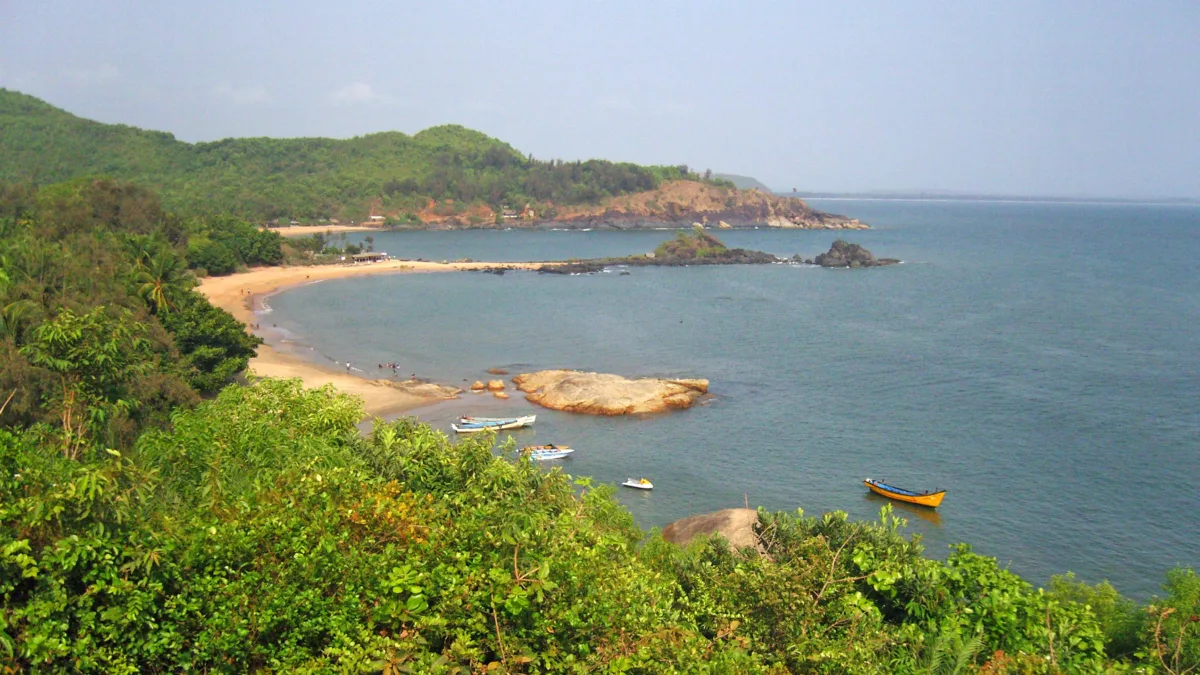
A Gokarna trip 3-day itinerary is the right length for this small town on the Karnataka coast. Three days give you a morning in the temple town, a full day walking the cliff path between five beaches, and a third day for a fort, a forest of strange black rocks, or simply doing nothing on the sand. Gokarna is two places at once: an old pilgrim town built around a Shiva temple, and a string of quiet coves to the south where the loudest sound is usually the sea.
How to reach Gokarna
There is no airport in Gokarna and no station in the town, so every route ends with a short road journey. The train is usually the simplest way in. The nearest station is Gokarna Road (GOK), about 10 km from town on the Konkan Railway. Not every train stops there, so the fallbacks are Ankola, about 20 km to the north, and Kumta, about 30 km to the south. Autos and shared vehicles meet most arrivals. From Bengaluru, the overnight Panchaganga Express and Karwar Express reach Gokarna Road in roughly 10 to 12 hours. Book on the IRCTC website and check the current timetable before you travel.
By air, the nearest airport is Dabolim in Goa, about 140 to 160 km away, roughly a three to four hour drive. Mopa in North Goa is a similar distance, and Hubballi is about 150 to 165 km inland. Mangaluru, about 240 km south, is the other option.
By road, Gokarna stands on NH66, the coastal highway. Bengaluru is about 480 to 490 km away, and overnight KSRTC and private sleeper buses take about 10 to 12 hours, arriving in the morning. Driving takes roughly 9 to 11 hours. From Panaji in Goa it is about 140 km, a three to four hour drive, and from Mangaluru about 240 km, or four to five hours. Agree any auto or taxi fare before you set off.
Best time to visit Gokarna
October to March is the season. The sea calms after the monsoon, the beach shacks and cafes reopen, and the cliff path between the beaches is dry and walkable. March to May is hot but workable if you keep to mornings and evenings. June to September is the monsoon: the sea is rough, most beach huts close, and boat trips generally stop.
Day 1 of the Gokarna trip 3-day itinerary: temple town and Kudle Beach
The Mahabaleshwar Temple, dedicated to Lord Shiva, holds the Atmalinga. The story told here is that Ravana was carrying the linga to Lanka when Ganesha tricked him into setting it down, and it could never be lifted again. Pilgrims traditionally visit the small Maha Ganapati Temple first, then the Mahabaleshwar Temple, and many take a dip at Gokarna Main Beach or the sacred Kotiteertha tank beforehand.
The temple is open from 6:00 AM to 12:30 PM and again from 5:00 PM to 8:00 PM, and entry for darshan is free. Timings can change on festival days, so check locally. Dress matters: this is a working temple, not a tourist attraction. Men are usually asked to wear a dhoti and remove their shirt before entering the inner sanctum, and women are expected to wear a saree or salwar kameez. Avoid shorts and jeans. Photography is not allowed inside, and footwear stays outside. Maha Shivaratri, in February or March, is the biggest festival of the year.
After the temple, walk Car Street and the lanes around it; vehicles do not come near the temple, so the last stretch is on foot through the bazaar. Eat lunch in town, where simple South Indian meals are the cheapest food you will find on the trip, then check in near Kudle Beach. Kudle is the wide crescent beach closest to town, a 20 to 30 minute walk over the first headland, or a short auto ride. It has the most cafes and places to stay of any beach in Gokarna, and the best sunset, with the sun dropping straight into the sea. Swim where the water looks calm and others are swimming; the town beach is better for a walk than a swim because of strong currents. Spend the evening at a shack on Kudle with grilled fish, and sleep early: day two starts at sunrise.
Day 2 of the Gokarna trip 3-day itinerary: the five-beach trek
Day two is the walk most people remember. The cliff path links Kudle, Om, Half Moon and Paradise beaches, with Gokarna Main Beach and Belekan Beach at the two ends of the full route. The core walk from Kudle to Paradise is roughly 6 to 8 km and takes four to six hours at a relaxed pace. Start by 8 AM to finish before the afternoon heat, carry water, and wear shoes with grip: the stretches between Om, Half Moon and Paradise cross rocky, uneven headlands.
From Kudle, the path climbs over the headland to Om Beach in about 30 minutes. Om is the famous one. Seen from above, its two curved bays trace the shape of the Om symbol, and it is the liveliest beach in Gokarna, with shacks, cafes and water sports. From Om, the trail to Half Moon Beach takes 30 to 45 minutes over a rocky cliff path. The last leg, from Half Moon to Paradise Beach, takes about 20 to 40 minutes. Paradise is the most secluded of the five, a mix of sand and rock with almost no facilities, so bring water and anything else you need. Karnataka Tourism advises against swimming here because of sharp rocks and strong undercurrents.
If you would rather not walk back, shared boats run from Om Beach towards Half Moon and Paradise in daylight hours during the season, usually for roughly ₹100 to ₹250 a head for a short hop. Organised boat tours with dolphin spotting and kayaking generally cost roughly ₹700 to ₹800 a person. Prices change with the season, so confirm with the boatmen on the day and check before you travel. End the day with sunset at Om Beach and dinner at Namaste Cafe.
Day 3 of the Gokarna trip 3-day itinerary: Mirjan Fort, Yana and a slow goodbye
Keep the last day flexible: a half-day trip inland, then a slow beach morning. Hire a scooter or a car and start early. Mirjan Fort is about 21 to 22 km south of Gokarna on the banks of the Aghanashini river, roughly a 30 minute drive. The 16th-century laterite fort was built under Queen Chennabhairadevi, known as the Pepper Queen. It is open roughly 9:00 AM to 5:30 PM and entry is free. An hour to an hour and a half is enough.
Yana is the bigger trip: about 45 to 50 km inland, roughly an hour and a half by road, into the forests of the Western Ghats. Two huge black limestone rocks rise out of the jungle here, Mohini Shikhara, about 90 metres tall, and Bhairaveshwara Shikhara, about 120 metres tall. From the car park it is a 30 to 40 minute walk through thick forest, with steps near the end. Allow two to three hours for the visit and head back before dark.
If forts and forests are not your pace, skip the driving and spend the morning at Kudle or Om instead. Murudeshwar, about 75 km south on NH66, is the other common add-on, with its tall Shiva statue and sea-facing temple.
Where to stay in Gokarna
Stay on or above Kudle or Om Beach if you want to be near the sand, the cafes and the start of the trek. The choice is between simple beach huts and guesthouses, generally roughly ₹600 to ₹2,500 a night, and more comfortable rooms and cliffside cottages, roughly ₹2,500 to ₹5,000 a night. Town stays near the temple and bus stand are the cheapest rooms of all, and a good base if you arrive late or leave early. Half Moon and Paradise have almost no proper places to stay, only the occasional tent camp, so sleep at Kudle or Om and visit them by day.
What to eat in Gokarna
Food in Gokarna is simple and good. The beach shacks serve fresh seafood, fish thalis, pasta, wood-fired pizza and long breakfasts, usually for roughly ₹200 to ₹450 a meal. Grilled fish and prawns are the obvious order, and the cafes on Kudle and Om stay open late in season. In town, the food is South Indian and vegetarian, with meals served on banana leaves near the temple.
Gokarna trip budget: what three days cost
Gokarna is one of the cheaper beach trips on India’s west coast, but the range is wide. The figures below are per person per day, excluding travel to and from Gokarna, and are planning ranges only. Check before you travel: prices rise sharply at Christmas and New Year.
- Budget traveller: roughly ₹1,500 to ₹2,500 a day. A beach hut, shack meals, local autos and the beach trek, which costs nothing.
- Mid-range traveller: roughly ₹2,500 to ₹4,000 a day. A comfortable room, cafe meals, a hired scooter and a boat tour.
- Three days in total: roughly ₹4,500 to ₹12,000 per person, not counting your train, bus or flight to Gokarna.
Stay is the biggest cost, roughly ₹600 to ₹2,500 a night for a hut or guesthouse. Food runs roughly ₹400 to ₹900 a day at the shacks. The temple, the fort and the trek are free.
Practical tips for Gokarna
- Respect the temple town. Dress modestly in town, cover up when you leave the beach, and never take photos inside the Mahabaleshwar Temple.
- Swim with care. Currents are strong at Gokarna Main Beach and Paradise Beach. Swim where others are swimming, in daylight, and never alone.
- Walk the trek in the morning. The headlands are exposed, with little shade, and the rocky stretches are harder in the afternoon heat.
- Carry cash, water and sunscreen. The shacks run on cash, the trek has no shops, and the sun on the cliff path is strong even in winter.
- Check the sea before booking a boat. Boat trips run only in season and in calm weather, and they stop in the monsoon.
Gokarna works best when you slow down to its pace. Three days are enough to see the temple, walk the beaches and get out to a fort or a forest. If you liked the slow beach-town feel, a Goa trip makes a natural next stop, and if the temple town is what stayed with you, the Pondicherry trip offers a similar mix of old streets and sea. For official visitor information, the Uttara Kannada district page on Gokarna lists the temple and beaches. Check timings, fares and sea conditions before you travel.


