Jaipur, the Pink City, is about 280 km from Delhi — close enough for a proper weekend trip and far enough to feel like a real break. In two days you can see the great forts, walk the old city, eat well and still be home on Sunday night. This guide gives you a day-by-day plan, how to reach Jaipur, where to stay and what the trip costs. Entry fees and timings change from time to time, so treat the figures here as planning ranges and check the official Rajasthan tourism portal or the ticket counter before you travel.
01. Jaipur weekend trip at a glance
| Distance from Delhi | About 280 km by road via NH48 |
|---|---|
| Drive time | 4.5 to 6 hours, depending on traffic |
| Fastest train | Vande Bharat Express, about 3 hours 40 minutes to 4 hours |
| Days needed | 2 days for the main sights; 1 day is rushed |
| Best time to visit | October to March |
| Money-saving ticket | Jaipur composite ticket, around ₹550 for Indian visitors, around ₹1,700 for foreign visitors, valid for 2 days |
02. How to reach Jaipur from Delhi
By road: the simplest option for a weekend
The usual route is NH48, the Delhi–Jaipur Expressway, through Gurugram, Manesar, Behror, Kotputli and Shahpura. The distance is about 280 km and the drive takes around 4.5 to 6 hours, including a short stop. Leave Delhi early, ideally before 7 am, because the stretch out of Delhi and through Gurugram is where most of the time is lost. A private cab usually costs roughly ₹3,000 to ₹4,000 one way, and tolls add around ₹500 to ₹700 one way. Having your own car also helps inside Jaipur, because Amber Fort and Nahargarh Fort sit outside the old city.
By train: the fastest and most relaxed option
The Vande Bharat Express is the quickest way to Jaipur, taking about 3 hours 40 minutes to 4 hours from Delhi Cantt. The Ajmer Shatabdi is the classic morning option: it leaves New Delhi at 6:10 am and reaches Jaipur at about 10:35 am, a journey of around 4 hours 30 minutes. More than 35 trains run between Delhi and Jaipur every day, so there are evening options back too. Book on IRCTC well ahead for a weekend, and check current fares and running days there, because they change with the season.
By bus: the budget option
Rajasthan roadways and private Volvo buses run through the day from Delhi’s ISBT terminals and take around 6 hours. It is the cheapest way to reach Jaipur, but it is also the slowest, so it suits travellers who are not in a hurry.
03. Best time to visit Jaipur
The best time to visit Jaipur is October to March, when the days are dry and pleasant for walking around forts. The Jaipur Literature Festival, usually held in late January, makes the city busy and hotel prices rise, so book early if you travel then. Avoid April to June if you can: summer temperatures in Jaipur can reach around 45°C, and walking the forts in that heat is hard work. The monsoon months of July to September are green and quieter, but afternoons can be humid.
04. Day 1: Amber Fort, Jal Mahal and the old city
Morning: Amber Fort
Start early. Amber Fort, about 11 km from the city centre, opens at around 8 am, and the first hour is the best time to see it before the crowds arrive. The fort was built from 1592 by Raja Man Singh I, and it was the capital of the region before Jaipur city was founded in 1727. It is now a UNESCO World Heritage Site as one of the Hill Forts of Rajasthan. Give it 2 to 3 hours: the courtyards, the Sheesh Mahal with its mirror work, and the views over Maota Lake are the highlights. Entry is around ₹200 for Indian visitors and around ₹1,000 for foreign visitors, after fees were revised in January 2026.
Late morning: Jal Mahal photo stop
On the way back from Amber Fort, stop at Jal Mahal on Man Sagar Lake. You cannot go inside the palace — it is closed to the public — but the view from the lakeside is free and it is one of the best photo stops in Jaipur, especially in the morning light. Give it 20 minutes.
Afternoon: Hawa Mahal, Jantar Mantar and City Palace
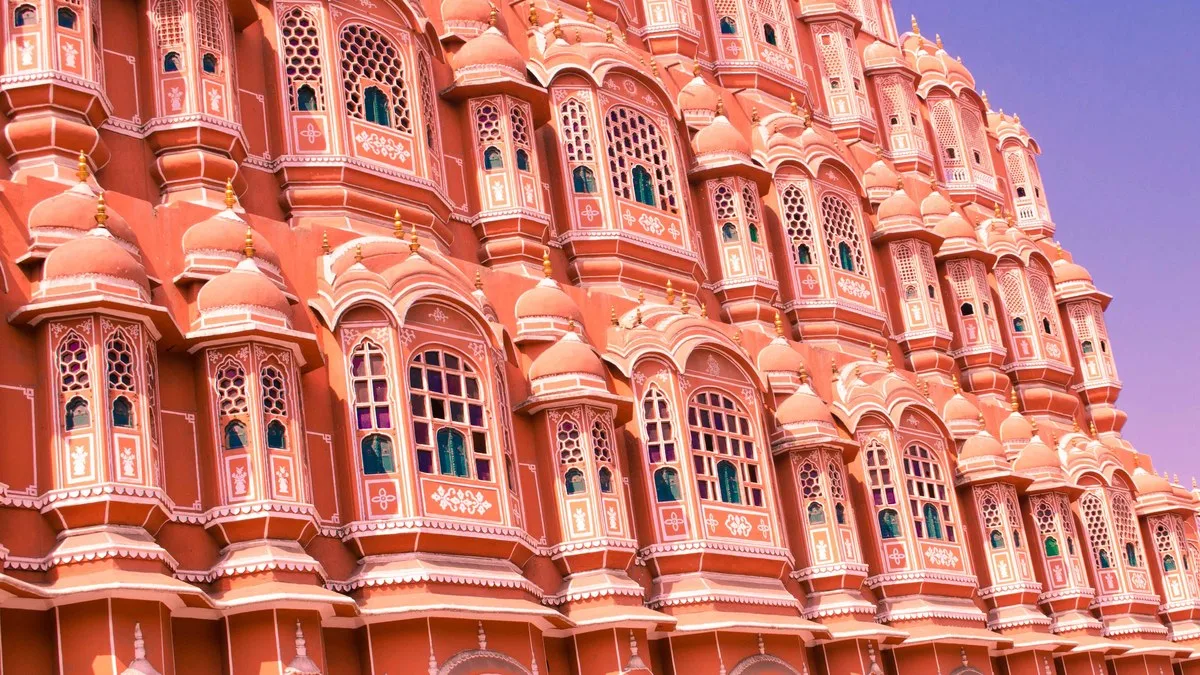
The three great sights of the old city stand within a short walk of each other, so see them together. Start at Hawa Mahal, the Palace of Winds, built in 1799 by Maharaja Sawai Pratap Singh. Its five-storey pink facade has 953 small windows, built so the royal women could watch street life unseen. It opens at around 9 am and closes at around 5 pm, and entry is around ₹100 for Indian visitors and around ₹600 for foreign visitors.
Next door is Jantar Mantar, the 18th-century astronomical observatory and UNESCO World Heritage Site. It opens at around 9 am and closes at around 4:30 to 5 pm, with entry around ₹100 for Indian visitors and around ₹600 for foreign visitors. Allow about an hour for its giant stone instruments.
Finish the afternoon at City Palace, the royal residence in the heart of the old city. It is privately run and is not covered by the composite ticket. The museum opens at around 9:30 am and closes at around 5 to 6:30 pm, and the museum ticket costs around ₹300 to ₹400 for Indian visitors, with higher rates for foreign visitors. Give it about 2 hours.
Evening: bazaars and dinner
Walk from City Palace into the bazaars. Johari Bazaar is known for jewellery, Bapu Bazaar for textiles and souvenirs, and Tripolia Bazaar sits by Jantar Mantar. For dinner, try the local food: pyaaz kachori, a Rajasthani thali, and a tall glass of lassi. Ghewar, the honeycomb-like sweet, is the city’s famous dessert.
05. Day 2: museums, markets and Nahargarh sunset
Morning: slow start in the old city
Day 2 is for the things Day 1 had no time for. Visit the Albert Hall Museum in Ram Niwas Garden, one of the oldest museums in Rajasthan, and stop at Patrika Gate, the colourful painted gate that has become a favourite photo spot. Then go back to the bazaars in daylight for proper shopping — block-printed textiles, blue pottery, mojari shoes and lac bangles are the classic Jaipur buys. Bargain politely; most shops expect it.
Afternoon: Nahargarh Fort at sunset
Head up to Nahargarh Fort in the late afternoon. The fort stands on the Aravalli ridge above the city and was built in 1734 by Maharaja Sawai Jai Singh II. It opens at around 10 am and closes at around 5:30 pm, though some listings show later evening hours, so check on the day. Entry is around ₹50 to ₹100 for Indian visitors and around ₹200 to ₹600 for foreign visitors. The sunset view over the pink city is the reason to come, and the rooftop cafe inside the fort is a good place to watch it from.
Evening: back to Delhi
Leave Jaipur after sunset. An evening train gets you to Delhi by late night, or drive back on NH48 in about 5 hours. If you would rather not travel at night, stay a second night and leave after breakfast on Monday.
06. Where to stay in Jaipur
Three areas suit most weekend travellers. Bani Park is a quiet residential area with many family-run heritage hotels and guesthouses, close to Jaipur Junction station and about 15 to 20 minutes from the old city by auto. The MI Road area is the main commercial stretch, with business hotels and easy transport.
Hotel prices vary a lot by season, and they rise sharply from October to March and around festivals, so check booking sites before you fix a budget. As a rough guide, budget guesthouses and hostels cost around ₹1,000 to ₹3,000 a night, mid-range hotels and small heritage havelis cost around ₹4,000 to ₹6,000 a night, and heritage palace hotels cost around ₹8,000 to ₹15,000 a night or more.
07. What a 2-day Jaipur trip costs
The table below is a rough per-person guide for two days, assuming two people share a room. Prices change with the season, so use these as planning ranges.
| Budget | Mid-range | Luxury | |
|---|---|---|---|
| Stay (1 night) | ₹1,000–₹3,000 | ₹4,000–₹6,000 | ₹8,000–₹15,000+ |
| Food (per day) | ₹400–₹600 | ₹900–₹1,500 | ₹2,000+ |
| Local transport (per day) | ₹300–₹500 | ₹1,500–₹2,500 | Private car |
| Monument tickets (2 days) | ₹550 (composite ticket) | ₹550–₹950 | ₹1,000+ |
| Total per person per day | ₹3,500–₹6,500 | ₹7,000–₹14,000 | ₹20,000–₹60,000+ |
Delhi to Jaipur travel is extra: a train seat or a share of a cab. The composite ticket, around ₹550 for Indian visitors and around ₹1,700 for foreign visitors, covers Amber Fort, Hawa Mahal, Jantar Mantar, Nahargarh Fort and Albert Hall for two days. City Palace is not included, so budget for it separately.
08. Practical tips for a Jaipur weekend
Buy the composite ticket if you plan to see Amber Fort, Hawa Mahal, Jantar Mantar and Nahargarh Fort — it is cheaper than paying at each gate. Book train tickets early for a Friday evening or Saturday morning, because weekend trains fill up. Start Day 1 at Amber Fort at opening time; by 11 am its stairways are full of tour groups. Carry a student ID if you have one, because student tickets at state monuments are much cheaper. Keep small cash for autos and bazaar shopping, and confirm monument fees and timings on the day you travel, because the state revised ticket prices in January 2026 and rates can change again.
09. Jaipur weekend trip: quick answers
How many days are enough for Jaipur? Two days cover the main sights comfortably: Amber Fort, Hawa Mahal, City Palace, Jantar Mantar, Jal Mahal, Nahargarh Fort and the bazaars. One day is possible but rushed — you would have about four hours of sightseeing between the drives.
Is Jaipur doable as a day trip from Delhi? It is possible by the early Vande Bharat or Shatabdi, but it makes for a very long day. A weekend with one night in Jaipur is much better.
What is the cheapest way to reach Jaipur from Delhi? A bus takes around 6 hours and is the cheapest option. The train is faster and more comfortable, and a shared cab works out well for a group.
What is the best month to visit Jaipur? October to March, with November to February the most pleasant. Avoid April to June, when daytime temperatures can reach around 45°C.
Fees, timings and prices in this guide were checked in November 2026. Confirm them on the official Rajasthan tourism portal or at the ticket counter before you travel.