Iran Bahrain Hormuz tanker attacks: Bahrain accused Iran on Saturday of striking a civilian industrial facility, as two more tankers were hit in the Strait of Hormuz and Tehran said it was preparing 14 oil tankers to challenge the US naval blockade.
Bahrain’s Interior Ministry said the attack on the industrial site caused a fire but no casualties, with civil defence teams bringing the blaze under control. Iran’s Fars news agency, meanwhile, reported that the Revolutionary Guards had attacked two US bases on the island, Sheikh Isa and Juffair, in response to what it called the illegal actions of the United States. The US has not confirmed any strike on its bases.
The Gulf kingdom has suffered several attacks this week, ending a weeks-long lull in a conflict that began with US-Israeli strikes on Iran in late February.
Iran Bahrain Hormuz tanker attacks: three ships struck since Friday
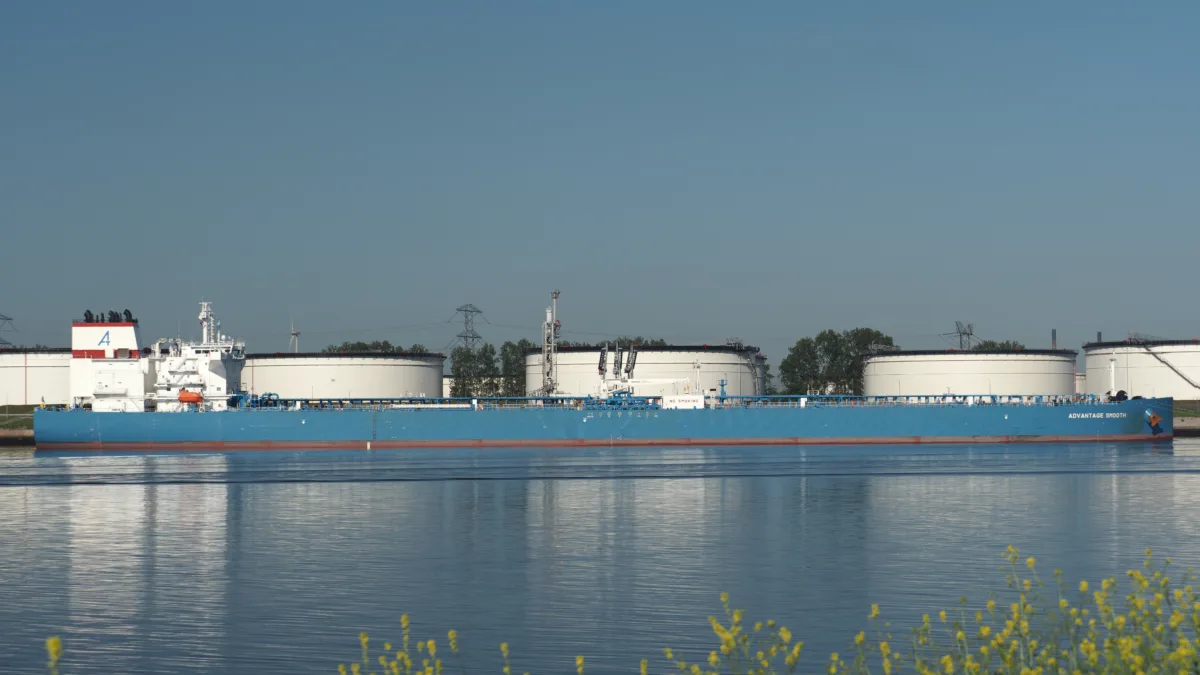
In the Strait of Hormuz, the British maritime agency UKMTO said on Saturday that one tanker was struck on the stern by an unknown projectile, with no casualties reported, and that another tanker was hit in its engine room. Maritime risk firm Marisks said three tankers had been struck since Friday: the Captain Leon, a Marshall Islands-flagged chemical and oil tanker hit at the bow on Friday afternoon, and the Hong Kong-flagged crude carriers Torkel and Arina on Saturday morning. All crews were reported safe. Marisks said Iranian involvement was “assessed as likely” but did not confirm who was behind the attacks.
Iran’s army gave a different account, saying a ship caught fire after entering a restricted zone east of the strait and striking a naval mine. Tehran has repeatedly blamed mines for ships catching fire in the strait in recent weeks, but the US military has said it cleared all mines from the main shipping routes.
Iran also said on Saturday that it had shot down a US drone over Qeshm Island in the strait, according to state television. A US military official had earlier said American fighter jets struck an Iranian missile site on the island last Tuesday.
Fourteen tankers readied to test the blockade
The confrontation could escalate further. Iranian lawmaker Vahid Ahmadi, a member of parliament’s National Security Committee, said 14 oil tankers were being prepared to challenge the US blockade of Iranian ports. Commodity intelligence firm Kpler says about 43 million barrels of Iranian oil remain stranded inside the blockade zone, with around 20 tankers identified near Kharg Island, Iran’s main oil export terminal.
Deputy Foreign Minister Kazem Gharibabadi said on Saturday that Iran would take “any action necessary” to break the blockade, which Tehran considers an act of war. Shipping through the strait, which carried about a fifth of the world’s oil before the war, is already 65% below pre-war levels, according to Gulf News.
Attacks on shipping in and around the strait are running at their highest levels since the conflict began, according to a CNN analysis of UKMTO data. More than 30 attacks were reported in October, and at least 22 had been reported in November as of Sunday.
Talks continue as Iran faces power cuts
Diplomacy has not stopped. Gharibabadi confirmed that a Qatari delegation visited Tehran on Friday evening and held two hours of talks. Foreign Minister Abbas Araghchi said regional talks “must be given a chance” and the blockade “must be lifted rationally”, but added that Tehran would not discuss reopening the strait until its demands were met: an end to the war on all fronts, the unfreezing of Iranian assets, the lifting of oil sanctions and an end to the US counter-blockade.
Inside Iran, the war is biting. Mohammad Allahdad, head of the national electricity company, told state television that rolling power cuts would begin on Sunday.
The New Indian Express reported Bahrain’s accusation and the tanker strikes, while Gulf News reported the plan to send 14 tankers through the blockade. Newsy reported the earlier tanker strikes near Oman in the first attack and the second.