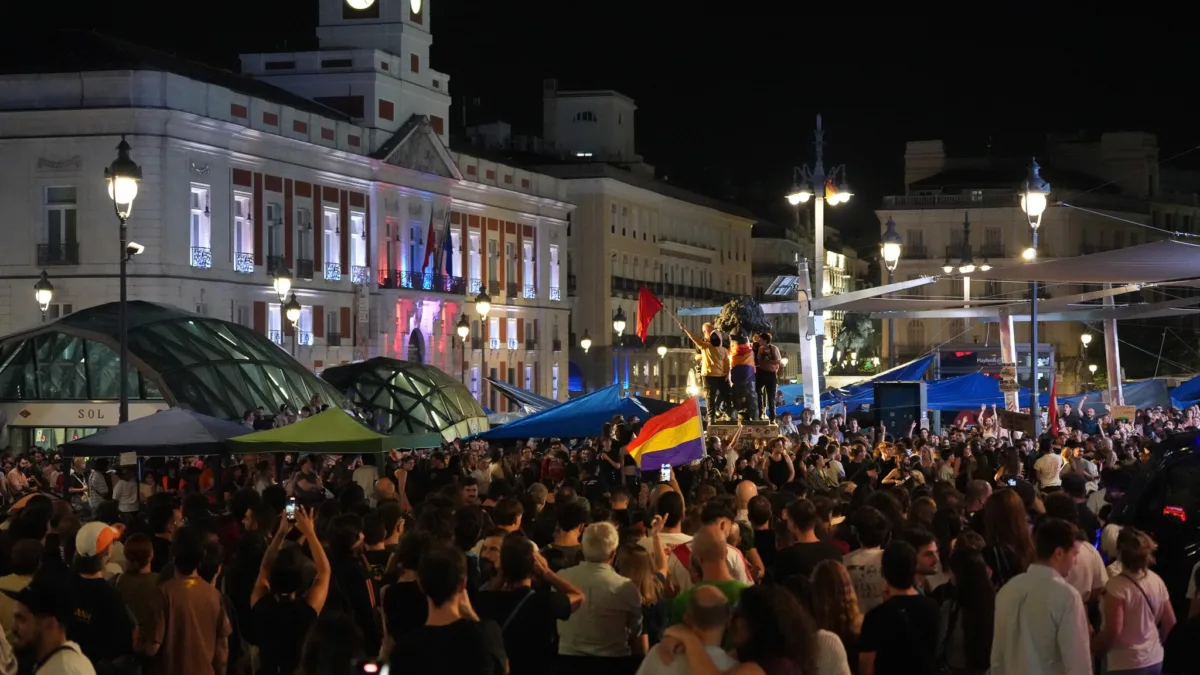
Spain held its first national general strike in 14 years on Wednesday, 11 November 2026, as anger over soaring rents and a shortage of homes brought the country to a standstill — weeks before a snap general election.
The 24-hour walkout was called by Spain’s two biggest unions, the Comisiones Obreras (CCOO) and the Union General de Trabajadores (UGT), under the slogan “wages, housing, and prices”. Transport and public services were disrupted across the country, and tens of thousands of young people joined protests in Madrid, Barcelona and other cities.
01. What sparked the protests
The trigger was the eviction in September of 87-year-old Maricarmen Abascal from the Madrid flat where she had lived for more than 70 years. Her corporate landlord had raised her rent sharply — she could not afford a fivefold increase on her monthly rent of 500 euros. She died in hospital in early October, about two weeks after the eviction, and her death turned her into a symbol of the housing crisis.
Within days of the eviction, housing activists set up a protest camp in Madrid’s Puerta del Sol square, which stayed in place for weeks. Demonstrators carried banners reading “Not one more Maricarmen” and demanded rent controls, open-ended rental contracts and more social housing.
02. How bad is the housing shortage
The Bank of Spain says the country is short of 750,000 homes, and the gap could reach one million. Only 92,000 homes were built in 2025.
Rents have risen to an average of 1,176 euros a month, according to figures cited by Al Jazeera, while the average salary of a young person is about 1,190 euros. Spain’s Youth Council says a young person would need to spend 98.7 per cent of their monthly salary to rent a place on their own. The average age at which young Spaniards leave their parents’ home is now 30.
Many young workers told Al Jazeera they still live with their parents, or share small flats with several other people, because renting alone is out of reach.
03. Election looms on 29 November
The left-wing coalition government presented two emergency decrees to parliament to protect vulnerable renters, but they were defeated by right-wing parties. Prime Minister Pedro Sanchez then called a snap general election for 29 November, hoping anger over housing would rally voters. His Socialist Party had trailed the conservative People’s Party and the far-right Vox party in the polls.
The housing crisis could now decide the election — and the strike was the clearest sign yet that, for many Spaniards, rent has become the biggest political issue in the country.