An Alibaug weekend trip from Mumbai is the easiest beach escape the city has. In about an hour on the ferry from the Gateway of India, you are standing on a quiet Konkan beach with a 17th-century sea fort sitting in the water just offshore. Leave on Saturday morning, and you can be eating fresh fish curry by lunch.
Alibaug, in Raigad district, is about 95 to 110 km from Mumbai by road — but most people take the ferry, which is faster and far more fun than sitting in highway traffic.
This guide covers the two-day plan that works best for a first visit: Kolaba Fort and Alibaug beach on day one, then Nagaon, Kashid and Murud-Janjira on day two. Fares and timings below are ranges — check them before you travel.
How to reach Alibaug from Mumbai
The passenger ferry is the classic choice. Catamarans run by PNP, Maldar and Ajanta leave from the Gateway of India in Colaba and land at Mandwa Jetty. The first boat leaves at about 6:15 am and the last at about 7:15 pm, with departures roughly every 30 to 60 minutes. The crossing takes 45 to 75 minutes. One-way fares are roughly ₹185 to ₹285 per person. The fare includes a free connecting bus from Mandwa Jetty to Alibaug town, about 19 to 20 km away, a drive of 35 to 45 minutes. Check the current ferry timings and fares before you travel, as schedules change with the season and the weather.
To take your own car, use the M2M Ro-Ro ferry from Bhaucha Dhakka (Ferry Wharf) in Mazgaon to Mandwa Jetty. The crossing takes about an hour on the water. Passenger fares are roughly ₹300 to ₹460 one way, and a standard car costs about ₹800 to ₹1,200, with larger vehicles costing more. The vessel carries up to 500 passengers and 150 vehicles, and vehicle slots sell out on weekends, so book online in advance.
By road, the drive is about 95 to 110 km via NH66 through Panvel and Pen. With the Atal Setu sea bridge (MTHL) open, it can take 2 to 2.5 hours in light traffic, but 2.5 to 4 hours on a normal weekend. Tolls are roughly ₹150 to ₹250 one way.
There is no direct train to Alibaug. The nearest station is Pen, about 30 km away, from where buses and taxis run to town. One warning: passenger ferries are often suspended during the monsoon, from June to September, when the sea is rough. The M2M Ro-Ro usually keeps running unless the weather is severe, but confirm the day’s sailings before you leave home.
Best time to visit Alibaug
October to February is the best time to visit. The weather is pleasant, with daytime temperatures roughly 17 to 30 degrees Celsius, the sea is calm, and the ferries run reliably. This is also peak season, so weekends around Diwali, Christmas and New Year get crowded. Book your stay and ferry tickets a week ahead.
March to May is hot and humid, but mornings and evenings are still fine for the beach, and stays are cheaper. June to September is the monsoon: the coast turns a deep green and the crowds disappear, but heavy rain, rough seas and suspended ferries make it a poor time for a beach weekend.
Day 1 itinerary: Kolaba Fort, Alibaug beach and the sunset
Take an early ferry, ideally the 8:15 am sailing, so you reach Alibaug town by late morning.
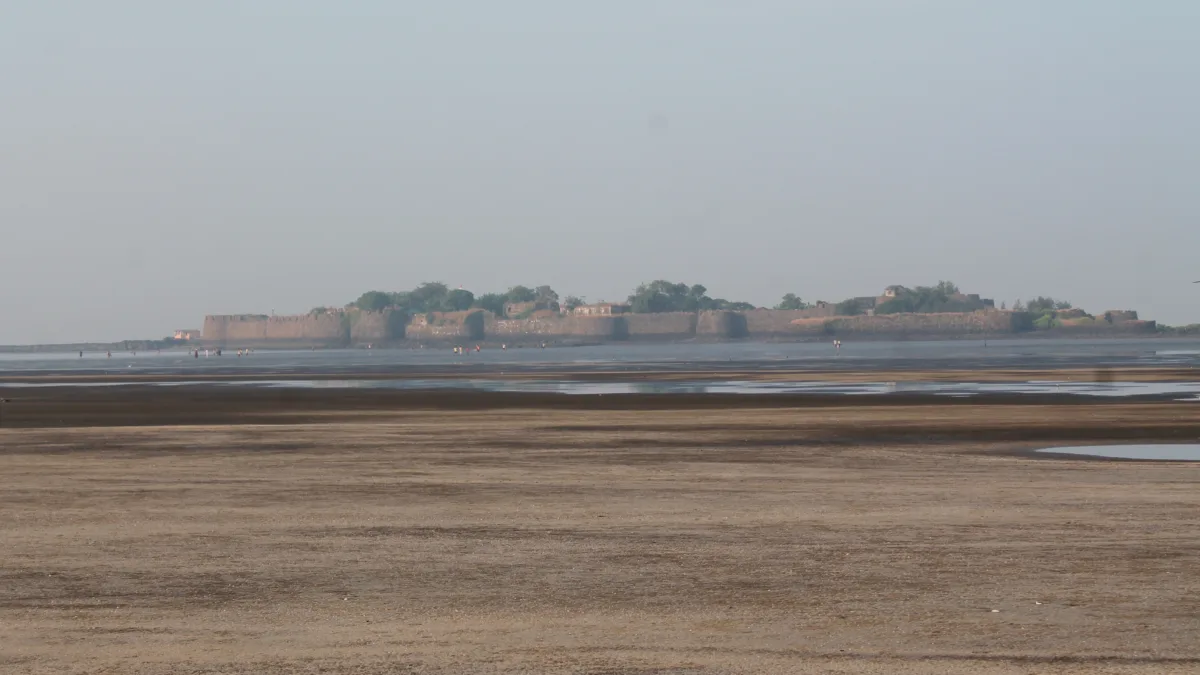
The star of day one is Kolaba Fort, also spelt Kulaba Fort. Built in 1680 by Chhatrapati Shivaji Maharaj as part of the Maratha coastal defences, the fort sits on a rocky island about 1 to 2 km offshore. Inside are a freshwater well, old cannons and a small Siddhivinayak temple. The fort is generally open from 10 am to 5 pm, but the tide decides whether you can reach it. At low tide you can walk across the exposed seabed in about 20 to 25 minutes. At high tide you will need a boat, and horse carts also run across the causeway at low tide, usually charging roughly ₹70 to ₹200 per person for the return trip. Check the tide timings and start back well before the water returns. Entry costs a nominal ₹5 to ₹25 per person, so carry cash.
Spend the afternoon on Alibaug beach itself — a long, flat stretch of dark sand, good for a slow walk rather than swimming, lively at sunset with snack stalls and horse rides. Walk north for about 2 to 3 km and you reach Varsoli beach, quieter and cleaner, with casuarina trees along the shore.
For dinner, try a seafood restaurant near the beach or in town. The Konkani thali, with fish curry, rice, bhakri and solkadhi, is the meal to order. If you are staying at a homestay, ask your host to arrange a home-cooked fish meal.
Day 2 itinerary: Nagaon, Kashid and Murud-Janjira
Day two is for the beaches south of town. Start at Nagaon beach, about 9 to 11 km from Alibaug. It is the busiest beach in the area, and the place to go for water sports: jet skiing, parasailing, banana boat rides and kayaking. Prices vary by operator and season, so agree on the price before you get on the boat.
If you have a car, drive on to Kashid beach, about 30 to 32 km south of Alibaug, a drive of roughly 45 minutes. Kashid is widely rated the best beach near Alibaug, with pale sand, clear water and casuarina trees. It is a good place for a relaxed swim and a long lunch at a beach shack. Without a car, hire a taxi for the day or take a local bus towards Revdanda and Murud.
With more time, continue to Murud-Janjira fort, about 45 to 55 km from Alibaug town, roughly a 1.5-hour drive. The fort is an island sea fort built by the Siddis in the 15th and 16th centuries, and it was never conquered. You reach it by a short boat ride from Rajapuri jetty near Murud town, which takes 10 to 15 minutes and costs roughly ₹80 to ₹100 per person for a standard boat. Boats run from about 7 am to 4:45 pm, and the fort is open from 7 am to 6 pm. There is no entry fee for the fort itself. Boat services stop during the monsoon, so this is a winter-season outing.
Head back by late afternoon, leaving town at least an hour before your return ferry from Mandwa. The last catamaran from Mandwa is around 7:30 to 8:15 pm, depending on the operator.
Where to stay in Alibaug
Alibaug has something for every budget, but book early for weekends, when the best places fill up days ahead. Budget travellers will find simple lodges and homestays near the bus stand and the beach. Families often prefer the resorts around Nagaon and Varsoli, many of which have pools and gardens and sit a short walk from the sand.
Stay near Alibaug beach or Varsoli if this is your first trip and you are travelling by ferry and bus. You will be within walking distance of the fort walk, the restaurants and the evening market. Stay near Nagaon or Kashid if you have a car and want beach mornings without the town crowds. Most stays are small and family-run, so read recent reviews and confirm meals and transport before booking.
Food in Alibaug
Alibaug’s food is Konkani coastal cooking, and seafood is the point of eating here. Order a fish thali with surmai (kingfish) or pomfret, bombil fry if you like it, and solkadhi, the pink kokum and coconut milk drink that goes with every meal. Vegetarians are well served too, with bhakri, pitla, usal and seasonal vegetables.
Beach shacks at Nagaon and Kashid serve fried fish, prawns and crab through the day, and the evening snack stalls at Alibaug beach sell bhel, vada pav and corn on the cob. If you are staying at a homestay, a home-cooked dinner is usually the best meal of the trip, so ask for it when you book.
What an Alibaug weekend trip from Mumbai costs
Alibaug is one of the cheapest beach weekends from Mumbai, and the ferry keeps transport costs low. All figures below are ranges, and prices change with the season, so check before you travel.
Transport: a return passenger ferry costs roughly ₹370 to ₹570 per person, including the free bus between Mandwa and Alibaug town. If you take the M2M car ferry, budget roughly ₹600 to ₹920 per person return, plus about ₹800 to ₹1,200 each way for a standard car. Driving the whole way costs roughly ₹600 to ₹900 in fuel one way, plus tolls of about ₹150 to ₹250.
Activities: Kolaba Fort entry is a nominal ₹5 to ₹25, and horse carts or boats to the fort cost roughly ₹70 to ₹200 per person. The boat to Murud-Janjira is about ₹80 to ₹100 per person. Water sports at Nagaon are priced per ride and vary by operator and season, so confirm before you book. Local taxis charge by the trip, so agree on the fare before you set off.
Stay and food vary too much by season and property to quote as fixed numbers. But a ferry-based weekend here costs far less than a comparable trip to Goa — see our 3-day North Goa itinerary for comparison.
Practical tips for your Alibaug weekend
Check the tide timings before you plan your Kolaba Fort visit. The low-tide window is the whole point of the fort, and it shifts every day. Your hotel can confirm the day’s timings.
Book ferry tickets in advance for weekend travel, especially the morning sailings out of Mumbai and the evening sailings back. Arrive at the Gateway of India at least 30 minutes before departure, and carry a photo ID.
Wear footwear you do not mind getting wet and muddy for the fort walk, and carry a dry bag or a plastic cover for your phone. The seabed walk is slippery in places, so go slowly. Alibaug’s beaches are not lifeguarded everywhere, and the sea can be deceptive. Swim only where others are swimming, and avoid the water during the monsoon.
Cash still matters here: small restaurants, stalls, horse carts and boatmen often prefer cash, and network coverage can be patchy on the beaches south of town. Withdraw money in Alibaug town before heading to Kashid or Murud.
Finally, do not try to squeeze everything into one day. Alibaug rewards a slow pace: a fort walk in the morning, a long lunch, a beach sunset and a second morning at Nagaon or Kashid. If you prefer hills to beaches, our Lonavala weekend trip from Mumbai follows the same two-day format.