A Gangtok trip packs a lot into three days: a walkable Himalayan capital with a lively pedestrian high street, centuries-old monasteries, a glacial lake at nearly 3,800 metres, and a border pass where India meets China. The high-altitude day sits in the middle so a snow closure can be moved. Every distance, permit rule and price below has been checked against at least two sources, and all prices are ranges: fares and fees in Sikkim change with the season, so check the current rate before you travel.
Gangtok is the capital of Sikkim, a small Himalayan state in north-east India, sitting on a ridge at about 1,650 metres. On a clear morning the Kanchenjunga range fills the horizon. Three days is the right length: one day is not enough, since you spend it recovering from the climb up from the plains,
How to reach Gangtok for your Gangtok trip
There is no railway into Sikkim yet, and the state’s own airport at Pakyong, about 30 km from Gangtok, has only limited flights, so almost every visitor arrives through Siliguri in West Bengal. Fly into Bagdogra Airport (IXB), about 124 km from Gangtok, and the drive up NH10 beside the Teesta river takes around 4 to 5 hours. The nearest major railway station is New Jalpaiguri (NJP), about 120 to 125 km away, with a similar 4 to 4.5-hour drive.
From Bagdogra or NJP, a shared jeep from Siliguri costs roughly ₹350–500 per person and is the cheapest way up; jeeps leave when full from the stands near the bus terminals. A reserved taxi costs considerably more but lets you stop along the Teesta. State buses also run between Siliguri and Gangtok and take longer, around 6 to 7 hours.
Foreign nationals need a Sikkim Restricted Area Permit even for Gangtok itself; since January 2026 it is applied for online through the e-FRRO portal after arrival in India, and it must be approved before you reach the Sikkim border. Indian nationals need no permit for Gangtok, but permits are a different matter once you head east towards Tsomgo Lake and Nathula Pass.
Best time to visit Gangtok
The two best windows are March to May and October to mid-December. October and November are the single best months: the air after the monsoon is at its clearest, Kanchenjunga shows most mornings, and daytime temperatures run about 17 to 20°C. Spring brings rhododendrons and orchids, with days warming from around 18°C in March to about 21°C in May, though the haze builds by May.
Winter, from December to February, is cold but manageable in town — afternoons around 12 to 14°C and nights about 5 to 7°C — and it is the season for snow at Tsomgo Lake and Nathula Pass. Avoid June to September: the monsoon brings heavy rain, landslides that can cut NH10, and cloud that hides the mountains.
Day 1 — MG Marg, monasteries and viewpoints
Start slowly. You have just climbed from the plains to 1,650 metres, and the first day is for the town itself. Begin at Tashi View Point, on the northern edge of Gangtok, where the early morning gives the clearest view of Kanchenjunga — go before 8 am, as the haze usually rolls in by mid-morning.
After lunch, visit Enchey Monastery, a 200-year-old monastery on a hill above the town, a short taxi ride from MG Marg; the afternoon prayer chanting is worth timing your visit for. Then take the ropeway from Deorali, a cable car of about 1 km running between three stations — Deorali, Namnang and Tashiling — which gives a bird’s-eye view of the town and the valley in about 20 minutes. It runs roughly 9:30 am to 4:30 pm daily, and an adult return ticket costs roughly ₹110–270; check the counter price on the day, as published figures vary widely.
Finish the day on MG Marg, Gangtok’s pedestrian-only high street of cafes, bookshops, souvenir stalls and restaurants. It comes alive in the evening, and it is also the practical heart of your trip: the travel agents who arrange the next day’s permits and the taxi stands are all here or a lane away.
Day 2 — Tsomgo Lake and Baba Mandir
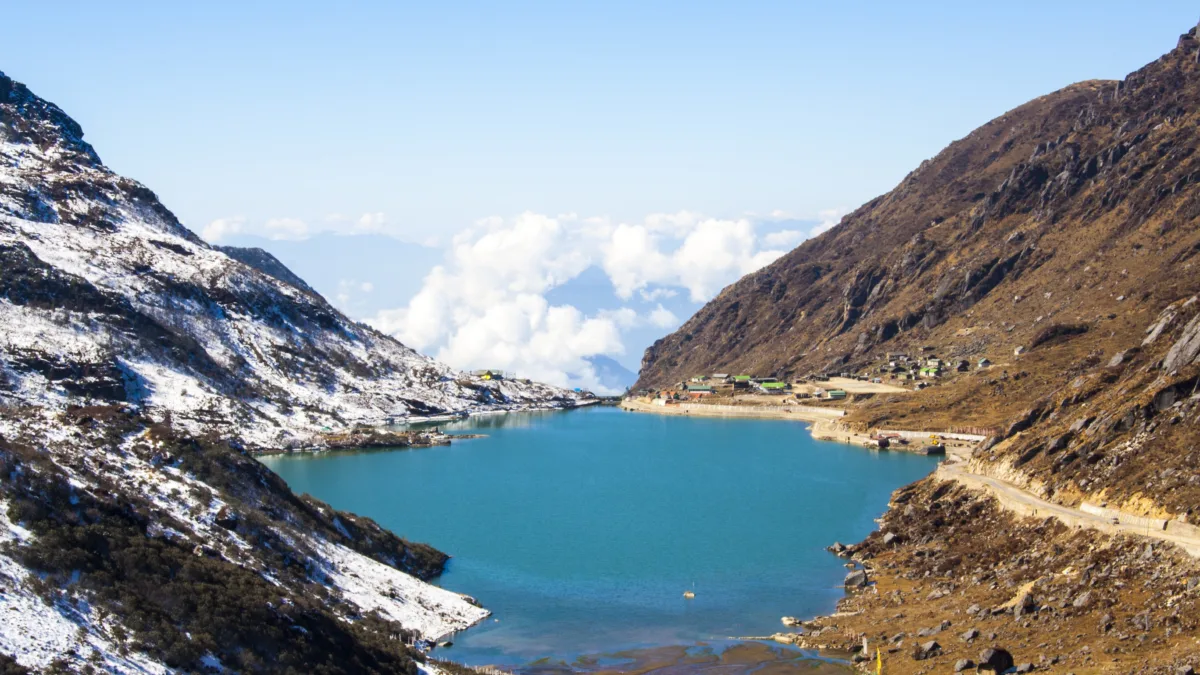
Day two is the classic Gangtok day trip, and it needs a permit. Tsomgo Lake, also called Changu Lake, is a glacial lake about 38 to 40 km east of Gangtok at 3,753 metres, and every visitor needs a Protected Area Permit, arranged through a registered Sikkim travel agent or your hotel the day before. Hand over a valid photo ID and two passport-size photographs per person; a passport, voter ID or driving licence is the safest choice, as Aadhaar is generally not accepted. Foreign nationals can visit on a one-day permit, but only in a group of two or more, through a registered agency.
Vehicles leave Gangtok between about 7 and 8 am. The road climbs through the Kyongnosla Alpine Sanctuary, a protected forest of rhododendron and fir, and the drive takes about 1.5 to 2 hours. At the lake, the water changes colour with the light and prayer flags line the shore; in winter the lake freezes. Spend 45 minutes to an hour walking the shore slowly — at 3,753 metres the air is thin, and rushing will give you a headache.
From the lake, continue about 12 to 16 km further to Baba Mandir, the shrine to Sepoy Harbhajan Singh of the Indian Army, who died near Nathula in 1968 and is still treated by soldiers as a guardian of the border. The shrine sits at about 4,000 metres; most visitors spend 20 to 30 minutes there, and there is an Army canteen for tea and snacks. The whole day takes 6 to 8 hours. A shared seat costs about ₹1,000–1,300 per person including the permit, while a reserved car costs about ₹4,500–5,500. Keep a spare day in your plan: heavy snow can close the road without warning
Day 3 — Nathula Pass and Rumtek Monastery
Day three is the one that needs the calendar checked first. Nathula Pass, at 4,310 metres on the India–China border, is about 54 to 56 km from Gangtok and takes about 2.5 to 3 hours each way. It is open to Indian nationals only — foreign nationals, including OCI cardholders, are not allowed — and only with a permit arranged through a registered agent a day in advance, at about ₹200 per person plus the agent’s handling charge. The pass is usually open from Wednesday to Sunday and closed on Mondays and Tuesdays, so plan this day for a Wednesday to Sunday.
Leave Gangtok by 7 to 8 am and go straight to the pass first, while the sky is clear and the Army is still letting vehicles up, then stop at Baba Mandir and Tsomgo Lake on the way down if you did not cover them on day two. At the top you walk the last stretch to the border fence, where Indian and Chinese posts face each other, and visitors usually get 30 to 45 minutes. A shared seat to Tsomgo, Baba Mandir and Nathula costs about ₹1,300–1,600 per person, and a reserved vehicle about ₹6,500–7,500 including the permit.
Back in Gangtok by mid-afternoon, spend the rest of the day at Rumtek Monastery, Sikkim’s largest monastery and the seat in exile of the Karmapa, head of the Karma Kagyu school of Tibetan Buddhism. It stands about 22 to 24 km from Gangtok across the Ranikhola valley, about an hour by road via Ranipool, and it is open daily from about 6 am to 6 pm with a nominal entry fee of about ₹10 per person. Allow a half day including travel. No permit is needed for Rumtek, which makes it a good fallback if the Nathula permit does not come through.
Where to stay in Gangtok
Stay within a 10-minute walk of MG Marg, on Tibet Road, PS Road or Namnang Road. Gangtok is built on a steep ridge, so a hotel that looks 1 km away on the map can be a 25-minute climb on foot, and staying central saves a taxi fare every time you go out. Budget double rooms in the lanes behind MG Marg cost about ₹1,500–3,000 a night, mid-range hotels about ₹3,000–5,500, and hostel dorm beds about ₹500–800. Ask your hotel about permits on arrival, not the next morning: the Tsomgo and Nathula permits are filed the day before, with your ID and photographs.
Food pointers
Gangtok eats Tibetan, Nepali and Sikkimese, and the best eating is cheap and close to MG Marg. Start with momos — steamed dumplings filled with vegetables, chicken or pork, served with a fiery red chutney — and thukpa, a warming noodle soup that tastes best after a cold morning at altitude. Shaphalay, a fried bread stuffed with minced meat, and sel roti, a sweet rice-flour ring, are sold at small bakeries and tea stalls around Lal Bazaar, the local market below MG Marg, where prices are lower than on the Marg itself. Carry cash for small stalls and shared jeeps, drink bottled or filtered water, and eat light on the morning of the high-altitude day — a heavy breakfast at 4,000 metres is a mistake you only make once.
Budget ranges for a Gangtok trip
Excluding travel to Siliguri, a three-day Gangtok trip costs roughly ₹5,000–9,000 per person when two people share a room, at a budget to mid-range level. On a daily basis, a shoestring traveller can manage on about ₹1,500–2,500 a day, a comfortable value trip runs about ₹2,500–4,000 a day, and a comfort-level trip with a reserved car and a mid-range hotel runs about ₹4,000–6,500 a day. The big variables are the hotel and whether you take shared seats or reserve a car; the permits themselves are cheap, at about ₹200 per person for Nathula.
A Gangtok trip works because it never asks you to choose between the town and the mountains. The monasteries and the Marg give you the culture, Tsomgo Lake and Nathula Pass give you the altitude, and the whole thing fits into three days from a single base. If you want another hill escape on the same pattern, read our Nainital weekend trip from Delhi and our Mussoorie weekend trip from Delhi. Before you book, check the current permit rules on the Sikkim Tourism how-to-reach page and the day-by-day permit detail in the Sikkim Escapes Tsomgo and Nathu La guide