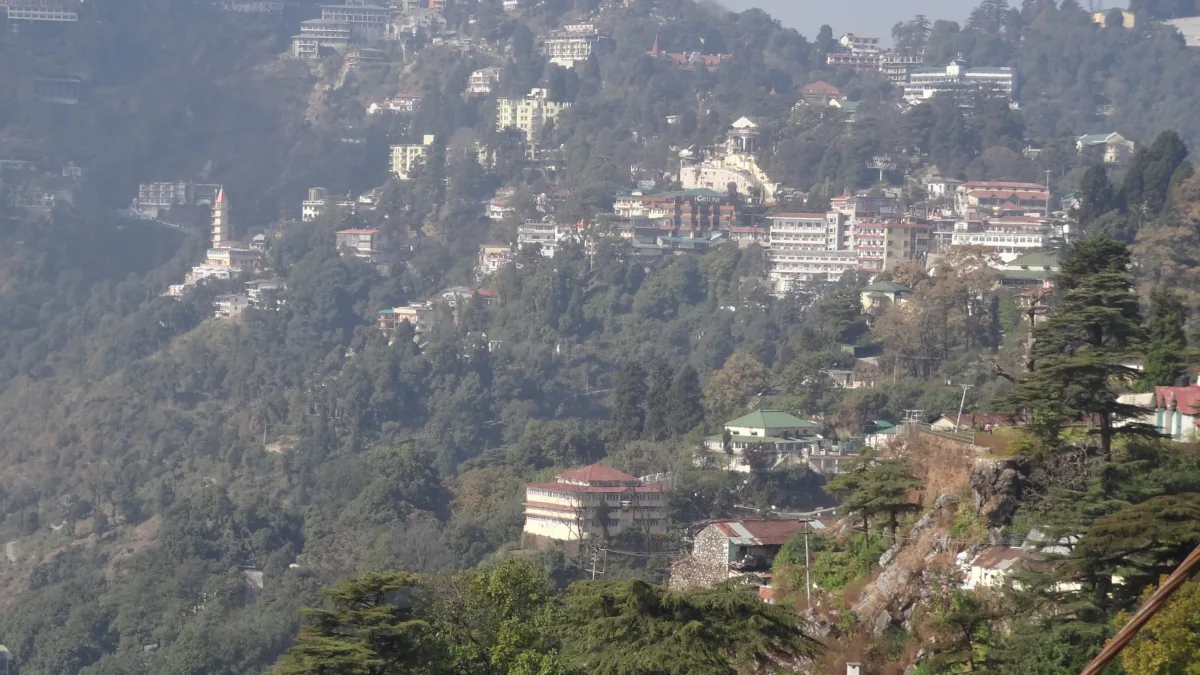
A Mussoorie weekend trip is still the easiest hill escape from Delhi. The town sits about 2,005 metres up in the Garhwal hills of Uttarakhand, roughly 250 to 290 km from the capital depending on the route, and two days is enough to walk Mall Road, ride up to Gun Hill, stand under Kempty Falls and slow down in Landour. This guide covers the 2-day plan that works best for a first visit. All prices below are ranges, not fixed figures, so check them before you travel.
Mussoorie weekend trip: how to reach from Delhi
By road: The drive is the most popular way to do a Mussoorie weekend trip, and there are now two routes. The Delhi–Dehradun Expressway, which opened in April 2026, runs about 210 km from near Akshardham in Delhi to Dehradun in roughly 2.5 to 3 hours. From Dehradun it is another 34 to 35 km up the hill road to Mussoorie, about 1 to 1.5 hours. All told, the expressway route is about 250 to 270 km and takes roughly 4.5 to 6 hours. The older route via Meerut and Roorkee is about 290 km and takes 6 to 7 hours. Leave Delhi early, and do the hill climb in daylight: the last stretch has steep hairpin bends.
By train: Mussoorie has no railway station of its own. The nearest railhead is Dehradun, 34 to 35 km below the town. The Shatabdi Express (12017) leaves New Delhi in the early morning, around 6:45 am, and reaches Dehradun around midday. The Vande Bharat Express (22457) from Anand Vihar is the fastest option, covering Delhi to Dehradun in about 4 hours 45 minutes. The overnight Mussoorie Express leaves Delhi late in the evening and reaches Dehradun in the morning. From Dehradun station, buses to Mussoorie leave from the stand next to the station, and taxis wait outside: a private taxi costs roughly ₹600 to ₹1,000 for the climb, and a bus seat costs about ₹50 to ₹70. Check timings and fares on IRCTC before you book.
By flight: The nearest airport is Jolly Grant Airport in Dehradun, about 60 km from Mussoorie, a drive of 1.5 to 2 hours. Flights from Delhi to Dehradun take about an hour, and several run daily. From the airport, take a taxi or a bus to Mussoorie.
By bus: Buses run from Delhi’s ISBT Kashmere Gate to Dehradun through the day, including overnight services, with fares of roughly ₹400 to ₹700 a seat. From Dehradun, state buses and shared taxis run up to Mussoorie.
Best time to visit Mussoorie
The most reliable months are March to June and September to November. In summer, daytime temperatures are usually between about 15°C and 30°C, with cool evenings and clear views over the Doon Valley. May and June are the peak season, when hotel rates rise sharply and Mall Road is at its most crowded.
September to November is the quieter favourite. After the monsoon the air clears, the hills are at their greenest, and October and November have the clearest skies of the year, with daytime temperatures roughly between 8°C and 20°C. This is the best window for Himalayan views from Lal Tibba and Gun Hill. Winter, from December to February, is cold, with daytime temperatures roughly between 1°C and 10°C. Snowfall is possible in January and February, but it is occasional and never guaranteed. July to September brings the monsoon, with heavy rain, mist and slippery roads, and a real risk of landslides on the hill roads, so this is the one window to avoid.
Day 1: Mall Road, Gun Hill and Camel’s Back Road
Plan to reach Mussoorie by early afternoon. Check in, drop your bags and head straight for Mall Road, the pedestrian spine of the town. The road runs about 2 km from Library Chowk in the west to Picture Palace in the east, lined with shops, bakeries, cafes and bookstalls, and vehicles are kept off it in the evenings.
From Mall Road, take the ropeway up to Gun Hill, the second-highest point in Mussoorie and its classic viewpoint. The ropeway starts near Jhula Ghar at Kulri Bazaar, and the ride takes about 5 minutes. A return ticket costs roughly ₹100 to ₹300 per person, depending on the season, so check the fare at the counter. The ropeway generally runs from about 10 am to 6 pm, sometimes later in peak season. If you would rather walk, the bridle path up from Mall Road is free and takes 20 to 40 minutes. On a clear morning the view runs north to the snow peaks of the Garhwal range; come at sunset for the Doon Valley lights.
Back on the Mall, spend the late afternoon on Camel’s Back Road, the quiet 3 km walking track that runs parallel to Mall Road from Library Bazaar to Kulri Bazaar, named for a rock formation that looks like a reclining camel. It is mostly flat, shaded by deodars, and far calmer than the Mall. End the day with dinner on Mall Road: the old Tibetan cafes serve momos and thukpa, and the Lovely Omelette stall is a local institution.
Day 2: Kempty Falls and Landour
Start day two early and head to Kempty Falls, about 15 km from Mussoorie on the road towards Yamunotri, a drive of 30 to 45 minutes. Leave before 9 am, before the crowds build. Entry to the falls themselves is free. You will pay separately for the extras: parking, lockers, changing rooms and the optional ropeway down to the pools, which costs roughly ₹100 to ₹250 for a round trip. The falls are generally open during daylight hours, roughly 8 am to 6 pm, but timings and access can change in the monsoon, so check locally. About 250 stone steps connect the road to the lowest pool. Allow 1.5 to 2.5 hours including the walk down and back.
Back in town by late morning, spend the second half of the day in Landour, the quiet cantonment ridge above Mall Road. Landour was set up as a British military sanatorium in 1827, and it still feels like a different town. Take a taxi up to Char Dukan, the cluster of four small cafes near St Paul’s Church, for bun-omelettes, pancakes and hot chocolate, then walk on to Lal Tibba, the highest point in the Mussoorie area at 2,275 metres. It is about 5 to 6 km from Mall Road, 20 to 30 minutes by taxi, or about 1.5 hours on foot uphill. On a clear day the telescope at the viewpoint picks out Bandarpoonch, Kedarnath and Chaukhamba.
Leave Mussoorie by about 2 in the afternoon if you are driving back to Delhi, so the hill descent and the expressway are both done in daylight.
Where to stay in Mussoorie
Stay near Mall Road if this is your first visit. It is the most walkable part of town, with the viewpoints, the market and the cafes all within a few minutes on foot. Budget rooms, in homestays, guesthouses and simple hotels, usually run ₹1,000 to ₹3,000 a night for a double room. Mid-range hotels usually cost ₹3,000 to ₹7,000 a night. Premium stays, including heritage hotels and boutique resorts, usually start at around ₹7,000 a night and can go well above ₹15,000 on peak weekends. Prices move sharply with the season, so treat these as ranges and check the rate for your dates.
Landour suits a quieter trip: the stays there are smaller and the lanes are calmer, but you will need a taxi for the climb up and down. Rooms on summer weekends and over Christmas and New Year sell out, so a Friday-to-Sunday trip in May or June needs to be booked weeks ahead.
What to eat in Mussoorie
Food in Mussoorie is simple and centred on Mall Road and Landour. The cafes serve North Indian food, momos, thukpa and basic continental dishes, along with tea and coffee, and several have tables with valley views. Expect to spend roughly ₹500 to ₹1,000 per person per day on food at cafes and small restaurants. A plate of momos costs roughly ₹50 to ₹100, and a cafe meal for two roughly ₹400 to ₹1,000.
At Char Dukan in Landour, try the bun-omelette, banana pancakes and hot chocolate. The Landour Bakehouse is known for its cakes and breads. On Mall Road, the Tibetan kitchens are the best value. The town’s shops sell homemade jams, jellies, pickles and fruit preserves, which make the most useful souvenir to carry home.
How much does a Mussoorie weekend trip cost?
All figures are ranges, per person, for a 2-day, 1-night trip, excluding travel from Delhi to Mussoorie. Check them before you travel.
- Budget trip: roughly ₹4,000 to ₹7,000 per person — train or bus, a budget guesthouse, cafe and dhaba meals, and the free sights, which in Mussoorie are most of them.
- Mid-range trip: roughly ₹7,000 to ₹13,000 per person — a private cab or the Shatabdi both ways, a mid-range hotel for one night, cafe meals, and a local taxi for Kempty Falls and Landour.
- Luxury trip: roughly ₹13,000 to ₹25,000 per person, with a premium hotel and a private car for the weekend.
- Budget room: ₹1,000 to ₹3,000 per night; mid-range room: ₹3,000 to ₹7,000 per night.
- Food: ₹500 to ₹1,000 per person per day.
- Gun Hill ropeway: roughly ₹100 to ₹300 return; Kempty Falls ropeway: roughly ₹100 to ₹250 return.
- Delhi to Dehradun bus: roughly ₹400 to ₹700 a seat; Dehradun to Mussoorie bus: about ₹50 to ₹70; private taxi up the hill: roughly ₹600 to ₹1,000.
These are planning ranges, not quotes, so check fares and room rates before you travel and keep a small buffer for a taxi you did not plan.
Good to know before you go
Uttarakhand made online tourist registration mandatory for everyone staying in Mussoorie from 1 August 2025. Register on the Dehradun Smart City portal before you travel; it is free of charge.
Pack for the hills, not the plains: even in summer, evenings in Mussoorie are cool, so carry a light jacket, and in winter carry proper woollens. Wear shoes with grip for the Landour climb and the Kempty Falls steps. Mobile networks work in the town centre, but coverage thins out on the walks, so download offline maps before you set out.
For official information on the town, see the Uttarakhand Tourism page on Mussoorie. If a Mussoorie weekend trip leaves you wanting more hills, our Shimla weekend trip from Delhi covers a longer 2 to 3 day plan, and our Kasauli weekend trip is the quieter alternative at a similar distance.


