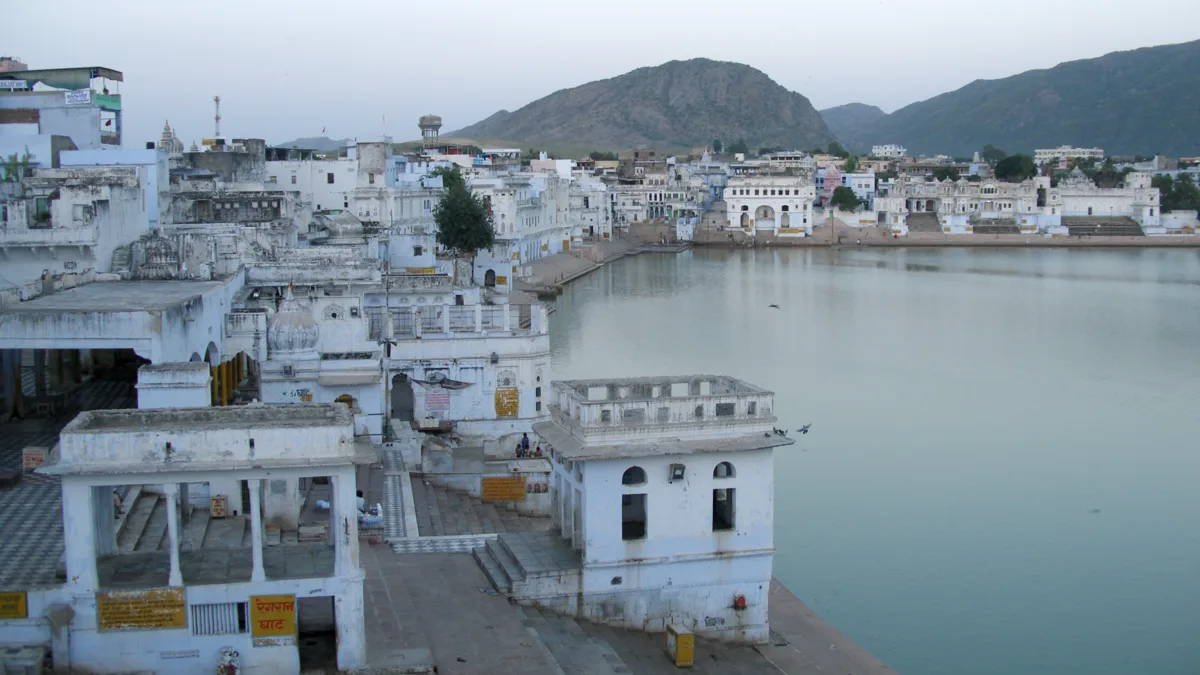
A Pushkar trip is one of the easiest spiritual weekends in Rajasthan. The town is small enough to cross on foot, built around a sacred lake ringed by 52 ghats, and home to one of the very few temples in the world dedicated to Lord Brahma. Two days is enough for the temple darshan, the lake at sunset, the hilltop Savitri Temple and the bazaars, with a morning left over for Ajmer Sharif Dargah across the hill. This guide covers how to reach Pushkar, the best time to go, a day-by-day plan, and what it is likely to cost.
Pushkar sits in a valley in the Aravalli hills, about 15 km from Ajmer, on the edge of the Thar desert. Hindus hold the lake among the holiest places in the country, and believe that a dip in its waters, above all on Kartik Purnima, the full moon of the month of Kartik, washes away a lifetime of sins.
Planning Your Pushkar Trip: How to Reach Pushkar
Almost everyone arrives through Ajmer. Ajmer Junction is the nearest big railway station, about 14 to 15 km from Pushkar over the Nag Pahar hill, roughly 30 to 40 minutes by road. From Ajmer station, a local bus costs about Rs 20 to Rs 30, a shared auto about Rs 50 to Rs 100 a seat, and a private taxi about Rs 500 to Rs 600.
By train from Delhi, the usual choice is the Ajmer Shatabdi, which takes about six hours and 40 minutes to Ajmer. The evening Vande Bharat is the other fast option. Check current train timings on IRCTC before you travel.
By road, Jaipur is about 145 to 150 km away, roughly three hours by car, and Delhi is about 400 km away, a long day behind the wheel, so most travellers break the journey in Jaipur or take the train to Ajmer. Jaipur International Airport, about 145 km away, is the nearest major airport with wide connections. Once you are in Pushkar, walk: the town is compact, and the lanes of the old town are pedestrian-only.
Best Time to Visit Pushkar
October to March is the best time for a Pushkar trip. The weather is cool and dry, walking is comfortable, and the evenings by the lake are pleasant. November to February is the sweet spot, and it is also when the town is at its busiest.
The great set-piece is the Pushkar Camel Fair, held every year in November, building up to Kartik Purnima. The 2026 fair ran from 17 to 24 November, ending on Kartik Purnima on 24 November. Entry to the fair is free. If you plan a trip around a future fair, confirm the dates on the Rajasthan Tourism website before booking, as the fair follows the lunar calendar and the dates move each year.
Summer, from April to June, is hot in the desert-edge town. The monsoon, from about July to September, brings rain and cooler air, but the lake and the temples are open all year, and a weekday visit outside the fair is the calmest way to see Pushkar.
Pushkar Trip Day 1: Brahma Temple, the Lake and the Evening Aarti
Start early at the Brahma Temple, a short walk from the lake through the bazaar. The Jagatpita Brahma Mandir is one of the very few temples anywhere dedicated to Lord Brahma, the creator, and the present structure dates to the 14th century. Inside is a four-faced marble idol of Brahma, and the red spire of the temple is visible from across the town.
Darshan runs in two sessions, morning and evening, with an afternoon break. In winter the temple is usually open from about 6:30 am to 1:30 pm and 3:00 pm to 8:30 pm; in summer it opens around 6:00 am and closes around 9:00 pm. The temple always closes between about 1:30 pm and 3:00 pm, so plan around the break. Entry is free, and darshan usually takes 15 to 30 minutes. The morning aarti is around 7:00 am and the evening aarti around 7:00 pm.
Come dressed modestly, with shoulders and knees covered. Remove your shoes before the steps, leave leather items outside, and do not take phones or cameras into the inner sanctum. Only the priests enter the sanctum itself; visitors have darshan from the hall in front of it.
After darshan, walk down to Pushkar Lake. The lake is ringed by 52 bathing ghats, stone steps running down to the water. Go barefoot near the water and dress modestly. The main ghats, including Brahma Ghat and Varaha Ghat, are a short walk from each other, and the lake is at its best in the early morning and at sunset. Priests offer pujas at the ghats; agree the amount first, as a puja usually costs about Rs 100 to Rs 500.
Rest through the middle of the day, when the temple is closed and the sun is strong. In the late afternoon, walk the bazaar lanes near the lake: Rajasthani textiles, silver jewellery, rose products and handicrafts, with Pushkar roses the famous local product. Bargain politely and compare prices between shops.
Come back to the lake for the evening. The Maha Aarti at the ghats is held around 6:00 pm, as the lamps are lit and the chanting begins, and it is the most memorable hour in Pushkar. Arrive a little early to find a place on the steps, then eat at one of the rooftop cafes near the lake.
Pushkar Trip Day 2: Savitri Temple, Bazaars and Ajmer
Start day two with the climb to Savitri Temple, on Ratnagiri Hill above the town. The temple is dedicated to Savitri, the first wife of Lord Brahma, and from the top the whole lake, the white town and the desert horizon spread out below. It is the best viewpoint in Pushkar, and it is at its finest at sunrise and sunset.
The stone stairway climb takes about 45 to 60 minutes on foot; the ropeway covers the ascent in about six minutes. The ropeway runs roughly from 7:30 am to 6:00 pm, and the hours shift with daylight and weather, so check at the counter. A return ticket costs about Rs 195 for an adult and about Rs 150 for a child, with a one-way ticket about Rs 120. Entry to the temple itself is free. The temple is open morning and evening, with a midday break.
After lunch, cross the hill to Ajmer for the Dargah. Ajmer Sharif Dargah, about 15 km away and roughly 30 minutes by taxi or bus, is the tomb of the Sufi saint Khwaja Moinuddin Chishti, who died in 1236, and is one of the most visited shrines in India. People of every faith visit, and entry is free. The gates are open from about 5:00 am to 9:00 pm in winter and about 4:00 am to 10:00 pm in summer, and the timings shift with prayer times and during Ramzan and the Urs, so check locally before you go. Allow one to two hours. Cover your head, remove your footwear and dress modestly.
Return to Pushkar for your last evening and the sunset over the lake. For another heritage weekend in the same style, see our Ajanta Ellora trip guide, and for another two-day pilgrimage itinerary, our Somnath trip guide.
Where to Stay in Pushkar
Stay near the lake if you want to walk to the ghats and the Brahma Temple, and accept that the lanes are pedestrian-only, so you will carry your bags a short way. Stay on the edge of town or on the Ajmer road if you want vehicle access, a pool and quieter nights. Pushkar has everything from simple guesthouses near the lake to heritage hotels overlooking the water and luxury resorts outside the town, including The Westin Pushkar Resort and Spa. Prices rise sharply during the Camel Fair, so book ahead and confirm the rate directly.
What to Eat in Pushkar
Pushkar is a holy town, and the food rules are strict: meat, fish and eggs are not served anywhere in town, and alcohol is not sold or served within town limits. Every restaurant is vegetarian, and many serve international vegetarian food alongside Rajasthani dishes.
Try the local Rajasthani food first: dal baati churma, the classic dish of lentils, baked wheat balls and sweet crumbled wheat, and malpua with rabri, the sweet pancake served with thickened milk. The rooftop cafes near the lake serve Israeli, Italian and continental vegetarian food. Budget about Rs 300 to Rs 800 a day per person for food, and drink bottled water.
How Much a Pushkar Trip Costs
All prices below are ranges, not fixed figures. Check current rates before you travel, as they change with the season, and fair week costs much more.
A budget traveller can manage on roughly Rs 2,000 to Rs 3,500 a day per person, covering a budget guesthouse, simple vegetarian food, local buses and autos, and the free sights. A comfortable mid-range trip, with a mid-range hotel, better restaurant meals and a hired taxi for the Ajmer day trip, usually works out at about Rs 4,000 to Rs 7,000 a day per person.
Most of what makes Pushkar worth visiting costs little or nothing. Entry to the Brahma Temple and the lake ghats is free, the Dargah is free, and the Camel Fair grounds are free to enter. The only tickets you are likely to buy are the Savitri ropeway, at about Rs 195 return, and a camel safari into the dunes, which usually costs about Rs 400 to Rs 600 for an hour at sunset.
Practical Tips for Your Pushkar Trip
Plan the days around the temple hours: the Brahma Temple closes between about 1:30 pm and 3:00 pm, and the ropeway does not run at sunrise, so climb on foot if you want the dawn view from the hill. Start early both mornings, as the light and the crowds are both better before noon.
Respect the town’s rules. Pushkar is vegetarian and alcohol-free by law, so do not bring meat or alcohol into town. Cover your shoulders and knees at temples and at the ghats, remove footwear at the ghats, and ask before photographing people bathing. Phones and cameras stay outside the Brahma Temple sanctum, so take your photographs from the courtyards and the ghats.
Carry a photo ID for hotel check-in. No permits are needed for Indian travellers. The sun is strong even in winter, so carry sunscreen and water, and socks for the hot stone floors. Check the Rajasthan Tourism website and the Pushkar travel guide before you travel, and confirm the Pushkar Camel Fair dates before booking a fair-week trip.


