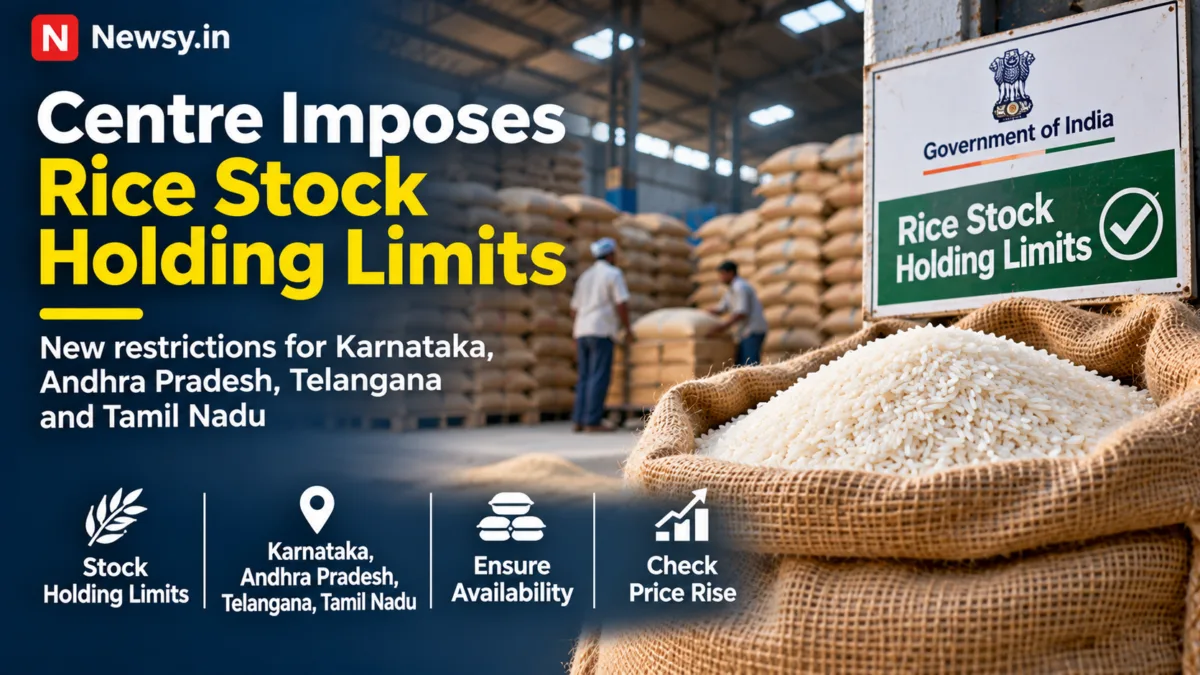
To curb festive market speculation and prevent arbitrary retail price spikes, the Union Ministry of Consumer Affairs, Food and Public Distribution has officially notified strict stock holding limits on non-basmati white rice and parboiled rice across key southern states, including Karnataka, Andhra Pradesh, Telangana, and Tamil Nadu.
The regulatory intervention empowers state civil supplies departments to conduct physical verifications and impose statutory ceilings on registered wholesalers, millers, and retail chain operators ahead of Diwali and regional harvest festivals. Read our national capital coverage in Delhi Air Pollution: Schools Up to Class 5 Shift to Hybrid Mode as AQI Turns Severe.
01. South India Rice Stock Holding Limits: Prescribed Ceilings
| Commercial Entity | Mandated Stock Limit Ceiling | Compliance & Verification Protocol |
|---|---|---|
| Wholesalers & Bulk Traders | 2,000 Metric Tonnes (MT) | Mandatory weekly declaration on Department of Food portal |
| Retailers (Standalone Outlets) | 10 Metric Tonnes (MT) | Immediate audit threshold for neighbourhood food distributors |
| Big Chain Retailers (Depots) | 2,000 MT at Central Depots / 10 MT per Retail Outlet | Multi-state tracking via logistics manifests |
| Rice Millers / Processors | Output of last 30 days OR 25% of annual capacity (whichever higher) | Bi-weekly operational filings with District Food Controllers |
| Geographic Scope & Legal Mandate | Karnataka (Bengaluru, Mysuru), Andhra Pradesh, Telangana (Hyderabad), and Tamil Nadu (Chennai) | Enforced under Section 3/7 of the Essential Commodities Act (ECA), 1955 |
02. Why the Centre Intervened in Southern Corridors
The Ministry acted following weekly price monitoring telemetry that showed wholesale prices of Sona Masoori, Ponni, and BPT rice variants firming by 4% to 7% despite healthy kharif paddy arrivals across mandis:
- Combating Artificial Supply Bottlenecks: Intelligence reports flagged speculative grain withholding by consortiums of millers and interstate stockists aiming to exploit heightened festive demand during Diwali and regional harvest celebrations.
- Protecting Consumer Purchasing Power: By capping physical warehouse inventories, the government aims to force prompt offloading into mandis and fair price shops, cooling consumer inflation in major urban centres including Bengaluru, Hyderabad, and Chennai.
- Digital Declaration Mandate: Unregistered grain quantities discovered during enforcement raids will face immediate seizure under Section 3/7 of the Essential Commodities Act.
03. Frequently Asked Questions (FAQ)
Which states are covered under the new rice stock holding limits?
The statutory limits apply across southern India, specifically Karnataka, Andhra Pradesh, Telangana, and Tamil Nadu.
What is the maximum rice stock a wholesaler can hold?
Wholesalers and bulk traders are restricted to holding a maximum of 2,000 metric tonnes (MT) of rice at any given point.
What legal action can be taken against hoarders?
Violators face prosecution and confiscation of undeclared grain inventories under the Essential Commodities Act, 1955.
04. Related NewsY Coverage
Read about festival milestones in Ayodhya Deepotsav 2026: 30 Lakh Diyas Lit on Saryu Ghats, explore urban governance in Old Delhi Chawri Bazar Collapse: Death Toll Rises to 6, check pollution mandates in Delhi Air Pollution: Schools Up to Class 5 Shift to Hybrid Mode, follow fintech updates in NPCI Defends UPI MDR Before Supreme Court, and review overseas investment rules in SEBI Eases KYC Norms for NRIs & OCIs.
05. Sources
- Ministry of Consumer Affairs, Food & Public Distribution: Notification on Imposition of Stock Limits on Rice under Essential Commodities Act, New Delhi, November 2026.
- The Hindu BusinessLine & Financial Express: Centre Empowers Southern States to Enforce Strict Stock Limits on Rice to Rein In Festive Prices, November 2026.
NewsY Agri-Commodities & Consumer Desk: Stock tonnage ceilings, trader classifications, and enforcement provisions reflect official statutory orders issued by the Government of India.