United Launch Alliance’s Vulcan rocket returned to flight on Sunday, launching 40 broadband satellites for Amazon’s Leo constellation from Cape Canaveral in Florida. It was the rocket’s first flight in nine months, after a booster failure grounded it in February.
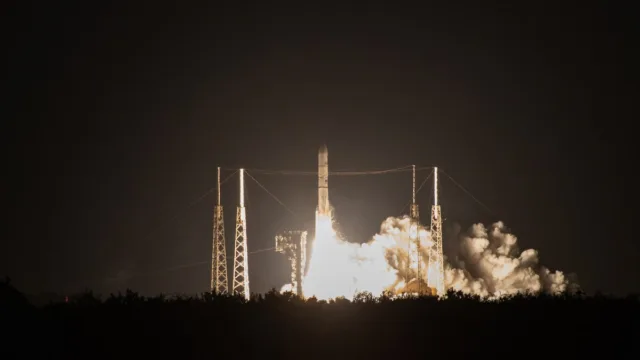
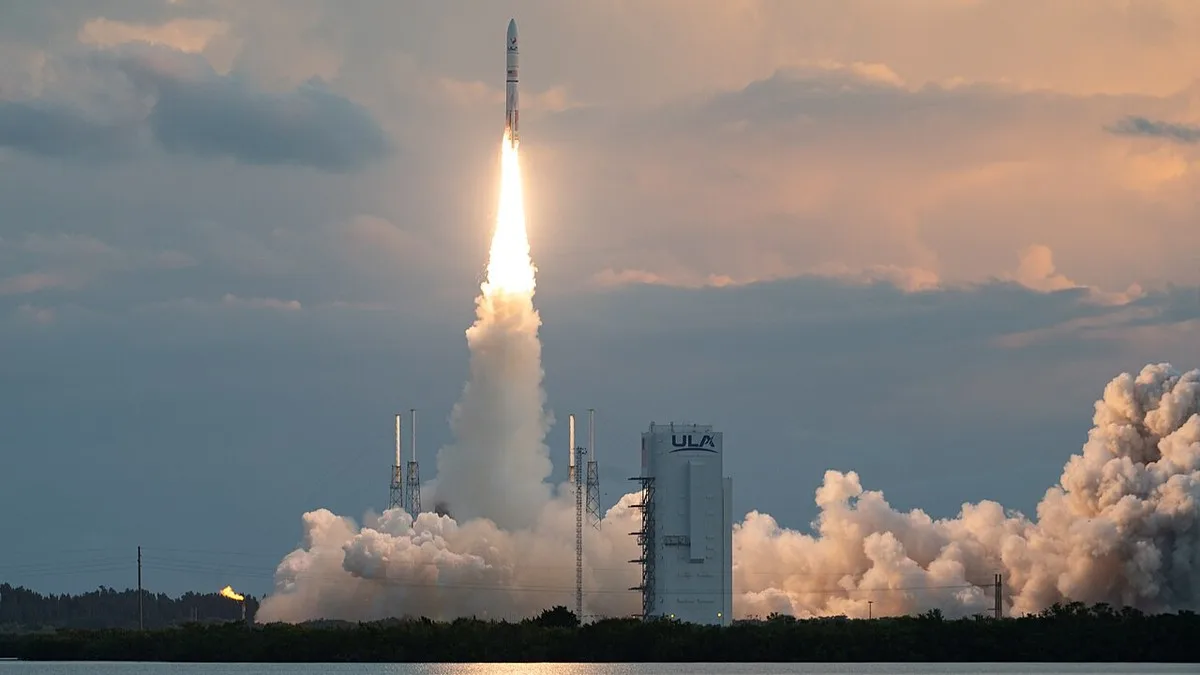
The Vulcan VC6L lifted off from Space Launch Complex-41 at Cape Canaveral Space Force Station at 12:41 p.m. local time (11:11 p.m. IST) on Sunday, November 15, after a late hold in the countdown, according to Florida Today’s live coverage. All six solid rocket boosters separated as planned in the first minutes of flight.
The mission, named LV-01 (Leo Vulcan 1), is the first of 38 Vulcan launches Amazon has booked with ULA. The 40 satellites are the largest batch Amazon Leo has put on a single rocket. Once deployed, the constellation will have 432 satellites in orbit, NASASpaceFlight reported.
01. Why this launch matters
Vulcan is ULA’s newest rocket, built to replace the long-serving Atlas V. This was only its fifth flight since its debut in January 2024. It had not flown since February 12, 2026, when a solid rocket booster nozzle failed during the USSF-87 national security mission. The rocket flew on Sunday with a redesigned booster nozzle, and the flight was being closely watched by the U.S. Space Force, which must certify the rocket for military launches.
For Amazon, the launch is a big step in its race with SpaceX’s Starlink. Amazon Leo, formerly known as Project Kuiper, plans a first-generation network of up to 3,236 satellites to deliver fast internet to places that existing networks do not reach. Amazon says it needs 578 satellites in orbit to start its first regional service, and it plans to begin initial service before the end of 2026 in the United States, the United Kingdom, France, Germany and Canada.
The launch had been delayed twice. Friday’s attempt was scrubbed after a power failure at a plant that supplies the nitrogen used to load propellant, and Saturday’s attempt was stopped by a network communication problem between ground equipment and the rocket.
02. What happens next
The rocket’s Centaur V upper stage was due to release the 40 satellites in 21 separate deployment events, starting about one hour and 17 minutes after liftoff, into a parking orbit about 450 km above Earth. The satellites will then raise themselves to their working orbit of about 630 km.
Amazon says its next Vulcan mission, LV-02, is already being prepared and could fly within weeks of LV-01. In total, Vulcan will carry more than 1,500 first-generation Leo satellites across the 38 contracted missions, more than any other rocket in the programme, Amazon said.
Sources: United Launch Alliance; Florida Today; NASASpaceFlight; Amazon. Photo: file photo of a Vulcan launch from Space Launch Complex-41, Cape Canaveral, in October 2024.