A Darjeeling trip is the classic Himalayan holiday. The town sits at about 2,042 metres in the hills of West Bengal, and on a clear morning you can see Kanchenjunga, the world’s third-highest peak, from the Mall Road. This Darjeeling trip 3 day itinerary covers the town on Day 1, the sunrise and the heritage sights on Day 2, and the toy train and the Rock Garden on Day 3.
Prices and timings below are ranges. Check them before you travel. Two warnings: the zoo and the institute are closed on Thursdays, and Happy Valley Tea Estate is closed on Sundays and Mondays in most guides.
01. How to reach Darjeeling
By air: The nearest airport is Bagdogra (IXB), about 67 to 70 km away, a drive of 2.5 to 3.5 hours through Kurseong. There are no shared jeeps direct from the airport, so take a prepaid taxi to Siliguri or New Jalpaiguri first, for about ₹300 to ₹700.
By train and road: The nearest main railway station is New Jalpaiguri (NJP), about 68 to 80 km by road, a drive of 3 to 3.5 hours. Do not confuse this with the 88 km figure you will see in some guides. That is the length of the railway line, not the road distance. From NJP or the bus terminus in Siliguri, shared jeeps leave when full and cost about ₹250 to ₹400 per seat. A reserved private car costs about ₹2,800 to ₹4,500. Fares move with fuel prices and rise in peak weeks, so check before you travel.
By toy train: The Darjeeling Himalayan Railway runs from New Jalpaiguri to Darjeeling, about 88 km on a 2 ft narrow-gauge line built between 1879 and 1881, and inscribed as a UNESCO World Heritage Site in December 1999. A daily diesel train, 52541, was listed in 2026 as leaving New Jalpaiguri at 10:00 and reaching Darjeeling at 17:30, a journey of about 7 to 7.5 hours. But the line has a record of landslide suspensions, so check the status on IRCTC or with Northeast Frontier Railway before you plan around the full run. The West Bengal Tourism page for Darjeeling has the official overview at wbtourism.gov.in, and toy-train tickets are booked on irctc.co.in.
02. Best time to visit Darjeeling
The best windows are March to May and October to December. Spring brings pleasant days, rhododendrons and the first-flush tea, though the views can turn hazy by afternoon in May. Autumn, especially October and November, has the clearest Kanchenjunga views of the year. Winter is cold, often clear, and less crowded. The monsoon, mid-June to mid-September, brings heavy rain, fog and poor views. Avoid it for a first trip.
03. Day 1 of this Darjeeling trip 3 day itinerary: arrive and walk the Mall
Afternoon, the drive in: Reach Darjeeling by road from Bagdogra or New Jalpaiguri, a drive of 2.5 to 3.5 hours. The Mall and Chowrasta area is pedestrian-only, so expect a 5 to 10 minute walk with your luggage from the taxi stand. Ask for a north-facing room for Kanchenjunga views.
Evening, Chowrasta and Observatory Hill: Chowrasta, also called Mall Road, is the flat, car-free square at the top of Nehru Road. It has shops, cafes, bookshops, pony rides and evening musicians, and a Kanchenjunga view on clear days. It is free and open all day. Behind it, Observatory Hill and the Mahakal Temple are a 10 to 15 minute uphill walk, on foot only. The Hindu shrine and the Buddhist prayer flags stand side by side, on the site of the monastery that gave Darjeeling its name. Entry is free, and it is open from early morning to evening, roughly 6 AM to 7 PM.
Dinner at Glenary’s or Keventer’s: Glenary’s, on Nehru Road near Chowrasta, is a heritage bakery and restaurant. It began as a confectionery called Vado in 1885 and has been run by the Edwards family since 1959. Keventer’s, at the junction of Nehru Road and Chowrasta, was established in 1911 and is known for its English breakfast, hot chocolate and Darjeeling tea, with an open terrace and Himalayan views.
04. Day 2: Tiger Hill sunrise, monasteries, zoo and tea
Early morning, Tiger Hill: Leave town at about 3:30 to 4:30 AM, depending on the season, and arrive 30 to 45 minutes before sunrise. Tiger Hill is 2,590 metres high and 11 to 13 km from town, a drive of 35 to 45 minutes. Sunrise is at about 4:40 AM in June and about 6:15 to 6:30 AM in January, so check the time the evening before. The first light falls on Kanchenjunga, 8,586 metres high. Entry fees are reported differently, so carry ₹20 to ₹100 in cash per person. Taxis need a daily coupon issued the day before, and self-driven cars are not allowed up the hill.
Morning, Batasia Loop and Ghoom Monastery: On the way back, stop at Batasia Loop, about 4.7 to 5 km from Chowrasta. The spiral loop was built in 1919 to let the toy train lose height below Ghum, and the Gorkha War Memorial stands at its centre. Entry costs about ₹15 to ₹20 per person. Then visit Ghoom Monastery, Yiga Choeling, about 7 to 8 km from town. Founded in 1850, it is the oldest monastery of the Gelug school in the Darjeeling hills. It is open from about 9 AM to 6 PM, and entry is free.
Morning, the zoo and the Himalayan Mountaineering Institute: The two share one campus on Jawahar Road West, and one combined ticket covers the zoo, the institute’s museum and the Bengal Natural History Museum. The institute was founded in 1954, after the first Everest ascent by Tenzing Norgay and Edmund Hillary. The zoo opened in 1958 and keeps red pandas and snow leopards. Timings are 8:30 AM to 4:00 PM, and the site is closed every Thursday. The entry fee is reported differently, so use a range of about ₹60 to ₹110 for an Indian adult and about ₹100 to ₹180 for a foreign adult, and confirm at the gate.
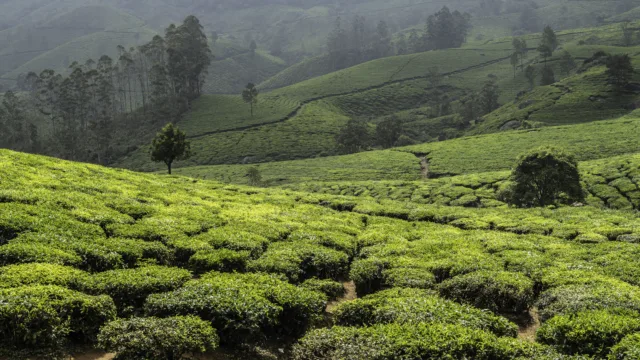
Afternoon, Happy Valley Tea Estate: Happy Valley, founded in 1854, is the closest working tea estate to town, about 2.5 to 3 km from Chowk Bazaar, at about 2,100 metres. Garden entry is reported as free, and a guided factory tour costs about ₹50 to ₹200 per person, in cash. Plan a weekday morning, because most guides say it is closed on Sundays and Mondays, and the factory largely stops work from November or December to February.
Evening, the Japanese Peace Pagoda: The Peace Pagoda stands on Jalapahar Hill, about 2 km from the Clock Tower. It opened to the public in 1992, and entry is free. It is open from 4:30 AM to 7:00 PM, and the prayer and drumming runs from 4:30 to 6:00 AM and 4:30 to 6:30 PM.
05. Day 3: the toy-train joy ride and the Rock Garden
Morning, the toy-train joy ride: The ride most visitors actually take is the Darjeeling to Ghum joy ride, a round trip of about 14 to 16 km in about 2 hours, with a halt at Batasia Loop and about 30 minutes at Ghum station and the railway museum. Ghum station is 2,258 metres high, the highest station on the line. Fares are about ₹800 to ₹1,000 per person for the diesel joy ride and about ₹1,310 to ₹1,600 for the steam joy ride, so confirm the fare on IRCTC for your date. Book about 60 days ahead in peak season, because the steam rides sell out first.
Afternoon, Rock Garden and Ganga Maya Park: The Rock Garden is about 10 km below town, with terraced gardens and the Chunnu Summer Falls. Ganga Maya Park is a further 3 km, with boating. Timings are reported differently, but the most-cited hours are 10 AM to 4 PM. Entry costs about ₹10 to ₹20 for an Indian adult and about ₹50 for a foreign visitor, and boating costs about ₹50 for 15 minutes. Then leave for New Jalpaiguri or Bagdogra, allowing 5 to 6 hours before a flight.
06. Where to stay in Darjeeling
Mall Road and Chowrasta are the heart of town and best for first-timers, though prices range widely, from about ₹3,000 to ₹25,000 a night in one 2026 area guide, because the range includes heritage and luxury hotels. Mid-range options near the Mall commonly cost about ₹2,000 to ₹3,000. Gandhi Road, 5 to 10 minutes on foot from the Mall, costs about ₹2,000 to ₹12,000. A hostel bed costs about ₹600 to ₹1,500 a night, a budget hotel about ₹1,500 to ₹3,000, and a 3-star hotel with a mountain view about ₹3,000 to ₹6,000. Add 30 to 60 percent in peak season and subtract 25 to 40 percent off-season.
07. What to eat in Darjeeling
Momos are the first thing to try. A plate of 8 to 10 steamed or fried dumplings costs about ₹60 to ₹150 in ordinary places, served with soup and chutney. Thukpa, the Tibetan noodle soup, costs about ₹80 to ₹180 a bowl, and thenthuk, its thicker hand-torn cousin, about ₹100 to ₹180. A vegetarian or non-vegetarian thali costs about ₹150 to ₹250 near Chowk Bazaar, and sel roti, the ring-shaped rice bread sold at morning market stalls, costs about ₹20 to ₹40 a piece with aloo dum. A day’s food costs about ₹400 to ₹1,000 per person.
08. How much does a Darjeeling trip cost?
All figures below are per person for 3 days in Darjeeling, twin sharing, and exclude the travel to New Jalpaiguri or Bagdogra. They are ranges. Check before you travel.
Budget, about ₹5,500 to ₹9,000 per person, or about ₹1,800 to ₹3,000 a day: shared jeeps, a budget room near Chowrasta, local food, and a shared Tiger Hill morning. Add about ₹800 to ₹1,600 for a toy-train joy ride. Mid-range, about ₹7,500 to ₹16,500 per person, or about ₹3,500 to ₹5,500 a day: a 3-star hotel near Mall Road, a private cab, cafe meals, and the joy ride at the upper end. On top of that, add the return travel to Siliguri: a shared jeep at about ₹250 to ₹400 a seat each way, or a reserved car at about ₹2,800 to ₹4,500.
If you like hill stations with a toy train, also read our Shimla weekend trip from Delhi, and for another weekend hill escape, our Lonavala weekend trip from Mumbai.
09. Tips before you go
Do not put the zoo on a Thursday, or Happy Valley on a Sunday or Monday. Book the steam joy ride about 60 days ahead in peak season. Carry cash for Tiger Hill, Batasia Loop and the tea estate. And check the toy train’s running status on IRCTC on the day, because landslide suspensions happen with little notice.