A Diu trip is one of the easiest short breaks on India’s west coast. The island sits off the southern edge of Gujarat’s Saurashtra coast, a pocket-sized former Portuguese colony of about 40 square kilometres with a 21-kilometre coastline, where a 16th-century sea fort, baroque churches and quiet beaches all fit into a single weekend. Two days is enough to see the best of it. This guide covers how to reach Diu, the best time to go, a day-by-day plan, where to stay, what to eat and what it is likely to cost.
Diu is not part of Gujarat. It is a district of the Union Territory of Dadra and Nagar Haveli and Daman and Diu, joined to the mainland by two bridges across a narrow tidal creek. The Portuguese built the great sea fort here in 1535 and ruled the island for nearly 450 years, until it was liberated on 19 December 1961. That history shows in the fort’s ramparts, the old town’s whitewashed churches, and the island’s food.
Planning Your Diu Trip: How to Reach the Island
The fastest way in is by air. Diu has its own small airport (DIU) on the island, with scheduled flights from Mumbai and Ahmedabad operated by IndiGo, Star Air and Alliance Air. The flight from either city takes about an hour, and the airport is a 10 to 15 minute taxi ride from Diu town and Nagoa Beach. Flights are few and fill up fast in December, so book early.
By train, the nearest major station is Veraval, about 90 km away, roughly a two-hour drive from Diu. Veraval has trains from Mumbai, Ahmedabad, Rajkot and Pune. From there, take a taxi or a state transport bus to the island. A smaller station, Delwada, sits 8 to 10 km from Diu town and has local trains to Junagadh and Veraval, but fewer services.
By road, Diu is about 360 to 370 km from Ahmedabad, roughly 7 to 8 hours, and about 85 km from Somnath, around 1.5 to 2 hours away, so the two combine easily. Mumbai is much further, about 844 km by road, so most travellers from Mumbai fly or take the train to Veraval. State and private buses run to Diu from Ahmedabad, Rajkot, Veraval and other Gujarat cities. For a full rundown of routes, the Diu how-to-reach guide lists the current flight, train and bus options.
Once you are on the island, the best way to get around is a rented scooter. The island is small and flat, and everything sits within a short ride. Scooters typically cost about Rs 300 to Rs 700 a day, and you will need a valid driving licence and a helmet. Auto-rickshaws and taxis are easy to find in town; agree the fare before you start.
Best Time to Visit Diu
October to March is the best time for a Diu trip. The sea is calm, the humidity drops, and daytime temperatures are usually in the high 20s. Water sports at Nagoa Beach run roughly from October to May.
Summer, from April to June, is hot. The monsoon, from June to September, brings rough seas: swimming is unsafe at most beaches and the boat trips stop running. Winter weekends and public holidays are the busiest times, so book well ahead for December and January.
Diu Trip Day 1: Fort, Caves and Churches
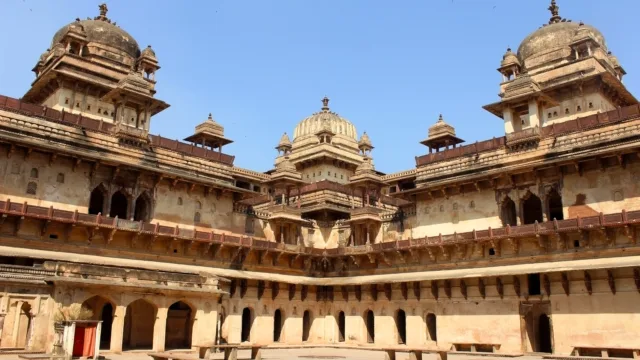
Start early at Diu Fort, the island’s great monument. Built by the Portuguese from 1535 onwards, it stands on the eastern tip of the island, ringed by the sea on three sides, with massive stone walls, old cannons, a moat and a lighthouse. Walk the ramparts in the morning before the heat builds; the views back towards the town and across the water are the best on the island. The fort is generally open daily from about 8 am to 6 pm, and most travel guides list entry as free, though charges have changed over time, so check at the gate on the day.
From the fort, it is a short walk to the Naida Caves, just outside the old city wall. The Portuguese quarried stone here to build the fort, leaving a maze of rock chambers and tunnels where sunlight falls through natural skylights. It is one of the most photographed spots on the island, and entry is free. Go in the morning or late afternoon, when the light is at its best, and wear sturdy shoes, as the rock floors are uneven.
Spend the afternoon in the old town. St Paul’s Church is the showpiece: a baroque church built by the Jesuits, its construction begun in 1601 and completed in 1610, dedicated to Our Lady of the Immaculate Conception. Its carved wooden interior is considered among the finest in any Portuguese church in India, and its white facade is modelled on the Basilica of Bom Jesus in Goa. It is still a working parish church, so visit quietly and respectfully, and avoid service times. You can read more about its history on the St Paul’s Church, Diu page. Nearby, the Diu Museum sits inside the old St Thomas Church.
End the day at Chakratirth Beach for sunset. Just above the beach stands the INS Khukri Memorial, a tribute to the Indian Navy frigate sunk during the 1971 Indo-Pak war, with a scale model of the ship and the names of the 176 sailors and 18 officers who were lost. It is a quiet stop, and the sea view from the hillock is worth the short climb.
Diu Trip Day 2: Beaches and the Sea
Day two belongs to the beaches. Start at Nagoa Beach, about 7 to 8 km from Diu town. It is Diu’s famous horseshoe bay, a curved sweep of sand lined with hoka palms, a branching African palm the Portuguese brought here and which grows nowhere else in India. This is the island’s activity beach, with swimming, parasailing, jet skiing and banana-boat rides in season. Go in the morning for the calmest water and the thinnest crowds. Water sports are priced on the beach, so agree the price first; as a rough guide, a jet ski ride costs about Rs 500, a banana boat about Rs 300, and parasailing roughly Rs 1,000 to Rs 1,500. Swim near the lifeguard flags, and skip the water in the monsoon, when the current is strong.
After lunch, head to Gangeshwar Temple at Fudam village, about 3 km from Diu town. This open-air shrine sits on the rocks at the waterline, where five Shiva lingas sit in the stone and the waves wash over them at high tide. Tradition says the Pandavas worshipped here during their exile. The best time to visit depends on the tide, so check the tide timings locally.
Finish the afternoon at Ghoghla Beach, the largest beach in Diu, on the mainland side across the bridge and about 15 minutes from town. It is a long stretch of golden sand with gentle waves, lifeguards and a marked swimming area, and it is far quieter than Nagoa. Ghoghla won the international Blue Flag eco-label in 2020 for clean water and beach facilities; the label is reviewed season by season, so check its current status before you go. Jallandhar Beach, with its small shrine on the rocks, is another calm option nearby.
With a third day, take the boat out to Panikotha, the small sea fort in the creek, or drive the 85 km to Somnath for the evening aarti at the Jyotirlinga temple. If beach trips are your thing, our Goa trip guide covers a longer three-day beach itinerary on the west coast.
Where to Stay in Diu
Stay near Nagoa Beach for the swimming and water sports, in the old town for the fort, churches and food within walking distance, or at Ghoghla for the quietest beach. Budget guesthouses and simple hotels in town generally run from about Rs 1,000 to Rs 3,000 a night. Mid-range hotels and beach resorts usually cost about Rs 3,000 to Rs 6,000 a night, while premium beach resorts start at about Rs 6,000 a night and go much higher in peak season. Prices spike sharply in December and over long weekends, so book ahead and confirm the rate directly with the property.
What to Eat in Diu
Diu’s food mixes Gujarati and Portuguese-influenced coastal cooking, and seafood is the star. Beach shacks at Nagoa and Ghoghla serve grilled kingfish, prawns and crab, cooked simply with chilli and local spices. Gujarati thalis are easy to find in town, and the old town has small restaurants serving Goan-style dishes from the island’s Portuguese past. Budget about Rs 400 to Rs 1,000 a day per person for food, depending on how much seafood you eat. Eat where the fish is fresh, and drink bottled water.
How Much a Diu Trip Costs
All prices below are ranges, not fixed figures. Check current rates before you travel, as they change with the season and peak months cost much more.
A budget traveller can manage on roughly Rs 2,500 to Rs 4,000 a day per person, covering a budget stay, simple food, a rented scooter and free sights. A comfortable mid-range trip, with a mid-range hotel, seafood meals and a water sport or two, usually works out at about Rs 5,000 to Rs 8,000 a day. A premium beach-resort stay can push that well past Rs 10,000 a day. Travel to and from Diu is extra: flights, the train to Veraval and the taxi or bus from there are the biggest single costs, so book transport early.
Most of Diu’s sights cost little or nothing. The fort, the caves, the churches, the temples and the beaches are free to visit, so your money goes mostly on the room, the food and getting around.
Practical Tips for Your Diu Trip
Diu is a Union Territory, with different rules from Gujarat. Alcohol is legally sold through licensed shops, bars and restaurants in Diu, under the Goa, Daman and Diu Excise Duty Act, 1964. Gujarat, next door, is a dry state. Do not carry alcohol across the border into Gujarat: police check vehicles at the border, and it is an offence.
Carry a photo ID for hotel check-in. No permits are needed for Indian travellers. The sun is strong even in winter, so carry sunscreen, a hat and water, especially for the fort, where there is little shade. The beaches have lifeguards in season; swim where they are posted. Mobile data can be patchy on the far western beaches. Finally, Diu is small and slow by design: leave gaps in the day, walk the old town in the evening, and let the island set the pace.