A Vaishno Devi trip is one of those journeys that stays with you long after you are back home. The shrine of Mata Vaishno Devi sits in a natural cave high in the Trikuta hills above Katra in Jammu and Kashmir. Reaching it means a climb of about 13 kilometres on foot, or a short helicopter ride followed by a gentle walk. This guide plans the whole thing as a simple two-day trip from Delhi: how to reach Katra, how the free yatra registration works, what the trek is really like, and what it all costs.
Vaishno Devi trip: how to reach Katra from Delhi
Katra is the base town for the yatra, and it has its own railway station, Shri Mata Vaishno Devi Katra (SVDK). The easiest way from Delhi is the train. The Vande Bharat Express 22439 leaves New Delhi at 6:00 in the morning and reaches Katra at about 2:20 in the afternoon, covering roughly 655 km in about 8 hours and 20 minutes. An afternoon Vande Bharat (22477) leaves at 3:00 pm and reaches Katra at about 11:20 pm; both trains skip Wednesdays. Fares are roughly Rs 1,650 to Rs 1,700 for a chair car seat and Rs 3,050 to Rs 3,100 for an executive chair car seat, including a meal. Book only through IRCTC.
Flying is the fastest option. There is no airport in Katra. The nearest airport is Jammu (IXJ), about 45 to 50 km away. The flight from Delhi takes about one to one and a half hours, and the drive from the airport to Katra takes about one to one and a half hours by taxi, or about two hours by bus. Door to door, the flight route usually takes about four to five hours. Overnight buses and the roughly 650 km drive on NH44 both take about 12 to 14 hours.
Yatra registration and what to carry
Before you start the climb, every pilgrim must register for the yatra. Registration is free and compulsory, and it is handled only by the Shri Mata Vaishno Devi Shrine Board. When you register you get an RFID Yatra Access Card, and you cannot cross the Banganga check post without it. Register online on the Shrine Board portal, maavaishnodevi.org, and collect the card in Katra, or register in person at a Yatra Registration Counter in Katra. Carry a valid government photo ID for every pilgrim, because the details on the card must match your ID.
One rule catches people out. You must cross the Banganga check post within six hours of your RFID card being issued, or the card becomes invalid and you have to register again. Collect your card close to the time you plan to start walking.
Pack light. Comfortable walking shoes with a good grip matter more than anything else. Carry warm layers even in summer, because the Bhawan is much cooler than Katra, especially at night. Take a raincoat for July to September, a water bottle, any medicines you need, and a small bag. There are free cloak rooms at Katra and at the Bhawan for extra luggage.
Best time to visit Vaishno Devi
The shrine is open every day of the year, and darshan runs round the clock, so there is no month when the yatra is closed. What changes is the weather on the climb and the size of the crowds. The most comfortable months are March to June and October to November. Spring brings mild days and clear views, and autumn brings crisp air after the monsoon.
Navratri, in spring and again in autumn, is the most festive time to visit and also the most crowded. Expect the longest darshan queues and the highest room rates in those weeks, and book trains, helicopter seats and rooms well ahead.
July to September is the monsoon, and this is the season to treat with respect. Heavy rain makes the paths slippery and brings a real risk of landslides. In August 2025 a landslide near Ardhkuwari killed more than 30 pilgrims and the yatra was stopped for about three weeks. If you travel in the monsoon, check the Shrine Board advisories every day and be ready to wait in Katra until the yatra reopens. December to February is cold and quiet, with snow possible near the Bhawan.
Day 1: Delhi to Katra, then up the mountain
Take the morning Vande Bharat from New Delhi and you reach Katra by mid-afternoon. Check into your hotel, freshen up, and collect your RFID card if you have not already registered online. Eat an early dinner and rest.
Most pilgrims begin the trek in the late afternoon or evening. The walk from Katra to the Bhawan is about 13 km on the main track, and most walkers take five to eight hours going up, with rest stops. The first stretch takes you to Banganga, about 1 km from Katra, where your RFID card is checked. From there the old track climbs past Charan Paduka to Ardhkuwari, the midpoint at about 6 km.
Ardhkuwari is a natural place to pause, and it is also where the battery car starts. The electric battery car runs from Ardhkuwari to the Bhawan via Himkoti, takes about 15 to 20 minutes, and costs roughly Rs 350 to Rs 450 going up and Rs 235 to Rs 300 coming down. Ponies and palkis are also available from Banganga at fixed rates posted at the prepaid counters: a pony costs roughly Rs 700 to Rs 1,800 one way, and a palki roughly Rs 2,100 to Rs 4,500 one way.
The helicopter flies from the Katra helipad to Sanjichhat in about eight minutes, and from Sanjichhat the Bhawan is about 2.5 km further on foot. The fare is roughly Rs 2,300 to Rs 2,700 per person one way, and tickets are sold only through the official Shrine Board portal, where booking opens 60 days ahead at 10 in the morning. Flights are cancelled in bad weather, with the fare refunded through the portal.
Climb through the night if you can: the track is lit and the night climb is cooler and quieter. Aim to reach the Bhawan in the early hours of the morning and join the darshan queue after the morning aarti.
Day 2: Bhawan darshan, Bhairo Nath and the journey home
Darshan at the Bhawan runs round the clock, except for about two hours twice a day when it pauses for the aarti. The morning Atka Aarti begins around 6:20 in the morning, and the evening aarti begins around 6:20 in the evening in winter and around 7:20 in the evening in summer.
At the Bhawan, leave your shoes, belt and bag at the free cloak room, then join the queue for the holy cave, where the three Pindis of Maha Kali, Maha Lakshmi and Mata Saraswati are worshipped. The darshan itself is brief, a few moments before the Pindis as the queue moves through. Waits can be under an hour on a quiet day and several hours at peak times.
After darshan, most pilgrims visit the Bhairon Nath temple at Bhairon Ghati, about 1.5 km above the Bhawan. Tradition holds that the yatra is complete only after this visit. On foot the steep climb takes 45 to 90 minutes. The easier way is the Bhawan-Bhairon ropeway, which covers the distance in about three minutes. It runs roughly from 9 in the morning to 5 in the evening in winter, with longer hours in summer, and the return fare is roughly Rs 100 to Rs 200 per person.
Begin the walk down to Katra by late morning or early afternoon. The descent takes about four to five hours on foot. If you took the helicopter up, you can fly back from Sanjichhat, or walk down and save the fare. The afternoon Vande Bharat leaves Katra at about 2:55 pm and reaches New Delhi at about 11:10 pm.
Where to stay in Katra
Katra has rooms for every budget, from basic guest houses to comfortable mid-range hotels, most of them within walking distance of the bus stand and the start of the trek. Rooms are cheapest on weekdays outside festival weeks. The Shrine Board also runs its own rooms and dormitories at Katra and up the route at Ardhkuwari, Sanjichhat and the Bhawan, along with free rest halls on a first-come basis. Book Board rooms through the official portal, as early as you can.
Food on the yatra
You will not go hungry on this trip. Small eateries, tea stalls and food outlets line the whole track from Katra to the Bhawan, and there are food counters at the Bhawan itself. The food is simple and vegetarian: rajma chawal, dal, roti, tea and packaged snacks. The Shrine Board runs langar halls where pilgrims can eat free. Katra town has plenty of vegetarian restaurants and dhabas near the bus stand.
How much a Vaishno Devi trip costs
A Vaishno Devi trip can be done on a modest budget, because the yatra itself is free. Registration costs nothing, darshan costs nothing, and the cloak rooms are free. What you pay for is travel, a room, food and any assisted transport you choose. These are planning ranges, not fixed prices.
A budget trip from Delhi, walking both ways and staying one night in a basic Katra hotel, usually works out to roughly Rs 5,000 to Rs 9,000 per person for two days. Add a helicopter seat one way and the total rises by roughly Rs 2,300 to Rs 2,700 per person; a return helicopter adds roughly Rs 4,600 to Rs 5,400. A battery car seat adds roughly Rs 350 to Rs 450 up, and the ropeway to Bhairon Nath adds roughly Rs 100 to Rs 200 return.
Practical tips for first-time pilgrims
Walk at your own pace and rest often; the climb gains about 2,700 feet from Katra to the Bhawan, and rushing it only makes the second half harder. Drink water regularly, and eat something at Ardhkuwari before the steepest stretch.
Keep your RFID card safe for the whole yatra, because it is checked more than once. Do not pay touts for registration, helicopter tickets or rooms; every official service is sold only through the Shrine Board portal or at its counters. If the weather turns bad, wait in Katra rather than starting the climb. The mountain will still be there tomorrow.
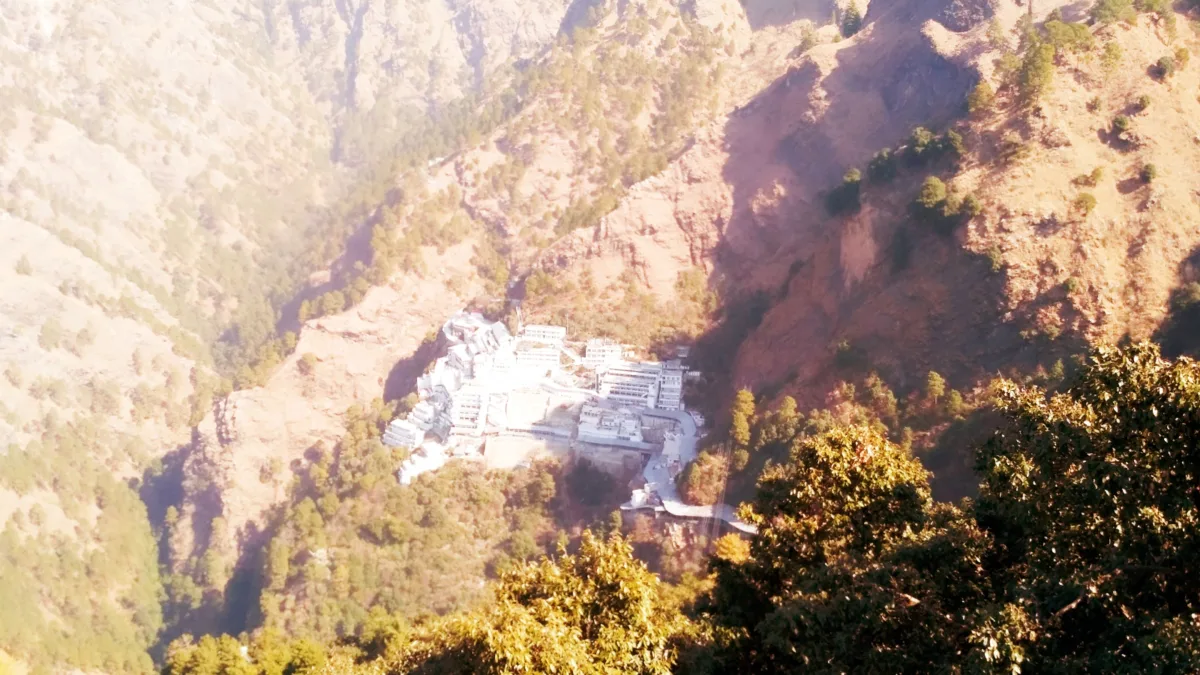
Above all, remember that this is a pilgrimage, not a race. The families who enjoy it most walk slowly, stop at the viewpoints, and let the mountain set the pace. The memory of the first sight of the Bhawan, white against the green Trikuta hills, is worth every step. If this whets your appetite for temple journeys, see our Shirdi trip itinerary and NDTV’s Vaishno Devi yatra guide.