A Mount Abu weekend trip from Ahmedabad is the closest proper hill-station escape the city has. Rajasthan’s only hill station sits on a granite plateau about 1,220 metres up in the Aravalli range, roughly 225 km from Ahmedabad, and it feels like a different state altogether: cool air, a lake in the middle of town, white-marble Jain temples, and a sunset that draws the whole town to one ridge every evening. Two days is enough to see the best of it without rushing. This guide covers how to reach Mount Abu, the best time to go, a day-by-day plan, where to stay, what to eat and what it is likely to cost.
Mount Abu is the one place in Rajasthan where summer does not rule. While the plains below bake, the hill town stays 8 to 10 degrees cooler, which is why families from Ahmedabad and across Gujarat have been coming up here for generations. The town is small and walkable, built around Nakki Lake, and most sights sit within a short drive of the lakefront.
Planning Your Mount Abu Weekend Trip: How to Reach
By road, Ahmedabad to Mount Abu is about 225 to 235 km, roughly 4.5 to 5.5 hours of driving. The usual route runs north on NH 27 and NH 14 through Mehsana and Palanpur to Abu Road, then up the ghat road to the hill town. The last stretch is the slow part: about 28 km of winding road with hairpin bends from Abu Road, so allow an hour for the climb alone. Leave early in the morning and you will be at Nakki Lake in time for lunch. Private cabs and self-drive cars both work well on this route, and state transport buses run regularly between Ahmedabad and Mount Abu.
By train, the nearest station is Abu Road (ABR), about 28 km below the town on the Delhi to Ahmedabad main line. Trains from Ahmedabad to Abu Road take roughly 3 to 5 hours, and there are several daily services, including the Ashram Express, which many travellers use as an overnight option. Check current timings on IRCTC before you book, as they change with the timetable. From Abu Road station, a private taxi up the ghat usually costs about Rs 500 to Rs 1,200, and takes 45 minutes to an hour. State buses and shared jeeps run the same climb for much less, and are easy to find outside the station.
By air, the nearest airport is Maharana Pratap Airport in Udaipur, roughly 165 to 175 km away, about a 3.5 to 4 hour drive from Mount Abu. That only makes sense if you are combining the trip with Udaipur; from Ahmedabad, the road or the train is the simpler choice. For a longer Rajasthan loop, our Udaipur weekend trip guide covers the lake city in two days.
Best Time to Visit Mount Abu
October to March is the best time for a Mount Abu weekend trip. Days are mild, usually around 12 to 29 degrees Celsius, the air is clear, and the viewpoints are at their best. This is peak season, so book your stay ahead for Diwali, Christmas and long weekends, when Gujarat comes up the hill in large numbers.
July to September brings the monsoon: green, misty hills and lower rates, but rain can cloud the viewpoints and make the ghat road slippery. Winter nights in December and January can fall close to freezing, so carry warm layers. Once in town, the centre is walkable; hire a taxi for the day for Guru Shikhar, Achalgarh and the temples, and agree the fare first.
Mount Abu Weekend Trip Day 1: Nakki Lake, Dilwara Temples and Sunset Point
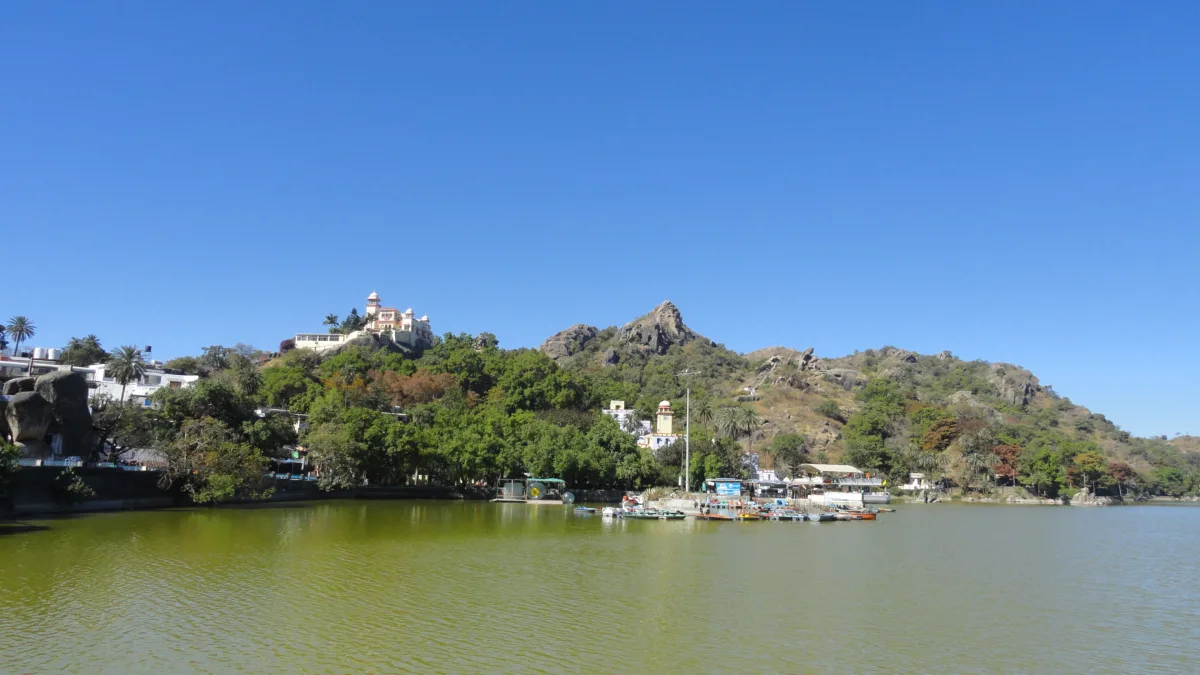
Arrive by late morning and start at Nakki Lake, the heart of the town. The lake is free to walk around, and boating is the draw: pedal boats and shikara-style boats usually cost about Rs 50 to Rs 200 per person, and a ride lasts roughly half an hour. Go in the morning, when the water is calm and the crowds are thin. Legend says the lake was dug by the gods with their nails, which is where the name comes from, and some of Mahatma Gandhi’s ashes were immersed here. The lakeside promenade fills up in the evening with snack stalls and families out for a walk.
From the lake, take the short climb to Toad Rock, a rock formation above the water that looks, as the name suggests, like a toad about to jump in. It is the best viewpoint over the lake and the town.
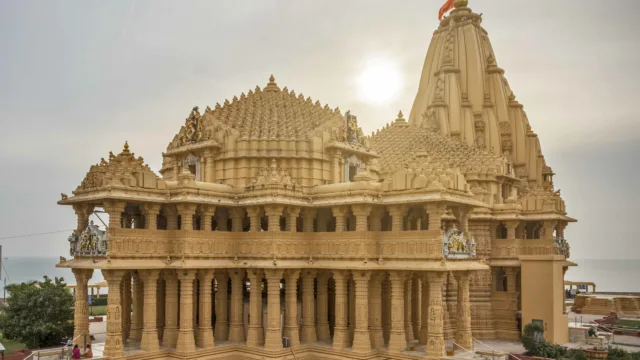
After lunch, head to the Dilwara Temples, about 2.5 km from town. This is the sight that makes the trip, and it is also the one most plans get wrong, because of the timings. The complex holds five white-marble Jain temples built between the 11th and 13th centuries, and the carving inside is so fine that the stone looks almost translucent. Vimal Vasahi, from 1031, and Luna Vasahi, from 1230, are the two to spend time in. Entry is free, but non-Jain visitors are admitted only in the afternoon, roughly from 12 noon to 5 or 6 pm, as the morning is reserved for Jain worship. Cameras, mobile phones and leather items are not allowed inside, and you need to cover your shoulders and knees, so dress accordingly and leave your phone at the gate. Allow 1 to 1.5 hours, and arrive well before 5 pm, as the closing time is reported differently by different guides. The Rahagir Mount Abu guide lists the current timings and visitor rules in one place.
End the day at Sunset Point, about 2 km from Nakki Lake. The whole town seems to gather on this west-facing ridge in the evening, and the stalls and the crowds are part of the experience. The sun drops over the plains below, and on a clear day the view stretches a long way. Get there a little early to find a good spot, and carry a light jacket, as it gets cold quickly once the sun is down.
Mount Abu Weekend Trip Day 2: Guru Shikhar, Achalgarh and the Lakefront
Start day two early at Guru Shikhar, the highest point in the Aravalli range at 1,722 metres, about 15 km from town. A small temple to Guru Dattatreya stands at the summit, reached by a climb of about 300 steps, and on a clear morning the views run across the whole range. Go early, when the air is clearest, and allow about 1.5 to 2 hours for the drive and the climb. Entry is free.
On the way back, stop at Achalgarh Fort, about 10 to 11 km from town. The Paramaras built it and Rana Kumbha rebuilt it in 1452; it is largely in ruins now, but the ramparts look out over the valleys below. Just below the fort stands the Achaleshwar Mahadev Temple, an old Shiva shrine still in active worship.
If you have the energy, climb the 365 steps to the Adhar Devi Temple, cut into the rock on the way back towards town. It is a steep climb and best done in the morning, before the heat. Otherwise, spend the rest of the day back at Nakki Lake: a second boat ride, a walk around the lake, and the market for souvenirs and snacks. The market near the lake sells Rajasthani handicrafts, woollens and the usual hill-station trinkets, and prices are open to bargaining.
Leave Mount Abu in the afternoon for the drive back to Ahmedabad, and you will be home by evening.
Where to Stay in Mount Abu
Stay near Nakki Lake if you want the lake, the market and the restaurants within walking distance. That is where most first-time visitors base themselves, and it is the liveliest part of town in the evening. Quieter stays sit on the roads towards Dilwara and Guru Shikhar, a short drive from the centre.
Budget guesthouses and simple hotels generally run from about Rs 800 to Rs 1,500 a night. Mid-range hotels with air conditioning and room service usually cost about Rs 2,000 to Rs 4,000 a night. Luxury resorts and heritage properties start at about Rs 5,000 a night and go well above Rs 10,000 in peak season. Rates rise sharply in peak months, by about 30 to 50 percent, and rooms sell out over Diwali, Christmas and long weekends, so book ahead and confirm the rate directly with the property. Check current rates before you travel, as they change with the season.
What to Eat in Mount Abu
Mount Abu’s food is mostly vegetarian, which suits the town’s large Jain and Gujarati visitor base. Rajasthani dishes such as dal baati churma and gatte ki sabzi are easy to find, Gujarati thalis are served all over town, and the lakefront stalls are good for chaat, sandwiches and a light dinner after sunset. Masala chai is worth seeking out on a cold evening.
Food is one of the cheaper parts of the trip. A simple meal at a local restaurant costs a few hundred rupees, and even the better hotel restaurants stay reasonable by city standards. Drink bottled water, and carry water on the climbs to Guru Shikhar and Adhar Devi, where there is little shade and no shops on the way up.
How Much a Mount Abu Weekend Trip Costs
All prices below are ranges, not fixed figures. Check current rates before you travel, as they change with the season, and peak months cost much more.
A budget trip for two days usually works out at about Rs 3,000 to Rs 5,000 per person, covering a budget stay, simple food and local transport. A comfortable mid-range trip, with a mid-range hotel, restaurant meals and a hired taxi for sightseeing, usually comes to about Rs 6,000 to Rs 10,000 per person. A luxury stay at a resort can push that well past Rs 15,000 per person. Travel to and from Mount Abu is extra: the train to Abu Road and the taxi up the ghat, or fuel and tolls if you drive, are the biggest single costs, so book transport early.
Most of Mount Abu’s sights cost little or nothing. Nakki Lake, Guru Shikhar, Sunset Point, Achalgarh Fort and the Dilwara Temples are all free to enter, so your money goes mostly on the room, the food and getting there. Boating on the lake, at about Rs 50 to Rs 200 per person, is the only regular sightseeing expense.
If you want a beach break after the hills, our Diu trip guide covers a two-day coastal weekend from Gujarat. And if the hill-station bug bites, the Offbeat Peak Mount Abu guide is a useful second source for timings and distances before you travel.