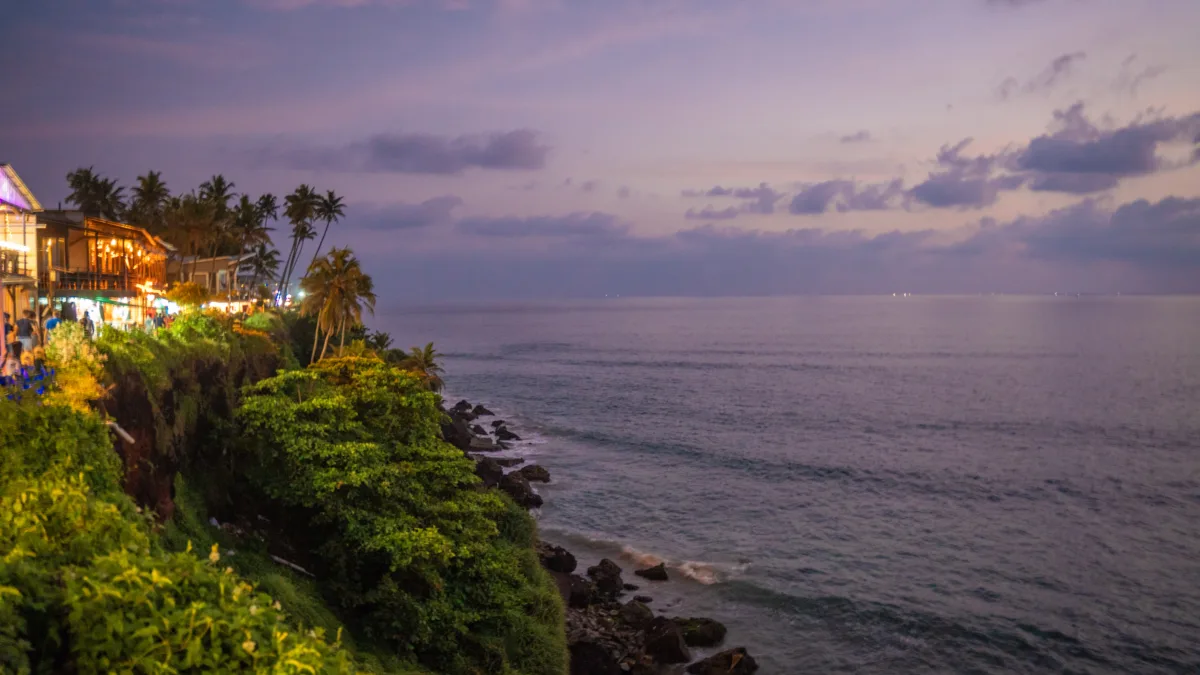
Varkala is the one beach town in Kerala where the land does the showing off. A red laterite cliff runs along the Arabian Sea, with cafes, yoga studios and small shops lined up on top and a wide sandy beach at its foot. Below the cliff sits Papanasam Beach, a holy stretch of sand where pilgrims have bathed for centuries, and a short walk away stands a temple said to be 2,000 years old. A Varkala trip is slower than a Goa holiday and quieter than most Kerala itineraries, which is exactly why people keep coming back. Three days is enough to walk the cliff properly, visit the temple and the Sivagiri Mutt, and get out to the backwaters at Kappil and the old fort at Anjengo without rushing any of it.
Planning Your Varkala Trip: How to Reach Varkala
The nearest airport is Thiruvananthapuram International Airport (TRV), roughly 40–50 km south of Varkala. The drive takes about one to one and a half hours, depending on traffic through Kazhakkoottam and Attingal. A prepaid taxi or app cab from the airport usually costs in the range of ₹1,500–₹2,000. A cheaper option is to take a cab to Thiruvananthapuram Central station and catch a train north from there. Check fares before you travel, as they change with the season.
For many travellers, the train is the simplest way in. Varkala has its own station, Varkala Sivagiri (VAK), about 2–3 km from the cliff and the beach. Trains from Thiruvananthapuram take under an hour, and the run from Kochi (Ernakulam) takes roughly four to five hours. From the station, an auto-rickshaw to the cliff costs around ₹80–₹150 and takes about 10–15 minutes. Tell the driver whether you want the cliff or the town, as they are not the same stop.
By road, Varkala sits on NH66, the coastal highway. The drive from Thiruvananthapuram takes around an hour and a half; turn off the highway at Kallambalam and follow the state highway west to the town. KSRTC buses run the same corridor and are the cheapest way to arrive, though they are slower and less convenient with luggage.
Best Time to Visit Varkala
The best months for a Varkala trip are October to March, when the weather is dry and the sea is at its calmest. November to February is the peak window: pleasant days, clear evenings and the most reliable swimming.
The south-west monsoon runs roughly from June to September. Varkala turns lush and green, prices drop, and the town goes quiet, but the beach is often rough and swimming is effectively off limits in heavy swells. Come in the monsoon for Ayurveda, yoga and the backwaters, not for the sea. One date to know: the Sivagiri pilgrimage, from 30 December to 1 January, fills the town with devotees in yellow, and rooms and roads get busy.
Day 1: The Cliff and Papanasam Beach
Start on the cliff. The paved path along the top runs for about a kilometre, past cafes, handicraft stalls, yoga shalas and guesthouses, with the sea on one side all the way. The northern cliff rises about 15 metres above the water, and the views are best in the late afternoon, when the light turns gold and the fishing boats come in.
Steps cut into the rock lead down to Papanasam Beach, the main beach below the cliff. Its name comes from the belief that a dip here washes away sins, and Hindu families still come to immerse the ashes of the departed, especially at the southern end. Treat the ritual areas with respect and give people space. A natural spring trickles out of the cliff face nearby, and local tradition credits its mineral-rich water with healing properties.
Swim only in the flagged, lifeguarded stretch of the main beach, and only in calm conditions. Varkala is known for a strong undertow, sudden waves and a sharp drop-off, and lifeguards cover the main northern section during the day only. Never swim alone, never swim after rain or in rough swell, and get out of the water immediately if a lifeguard asks you to. Stay behind the barricades on the cliff path: parts of the edge have caved in after heavy monsoon rain.
End the day where you started, on the cliff, watching the sun go down from a cafe table. The cliff-top restaurants serve fresh fish, Kerala dishes and the usual traveller menu of Italian, Chinese and continental food.
Day 2: Temple, Sivagiri Mutt and Kappil Backwaters
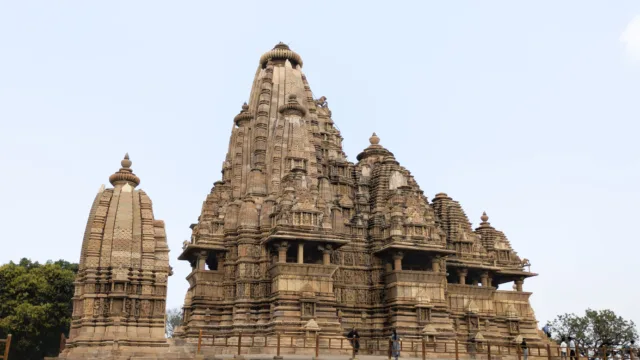
Begin early at the Janardana Swamy Temple, on a small hill above the beach at the start of the road down to Papanasam. Dedicated to Lord Vishnu, the temple is believed to be more than 2,000 years old and is known as Dakshin Kashi, the Kashi of the south. It opens in the morning from around 4 am to noon, and again in the evening from about 5 pm to 8 pm; timings can shift on festival days, so check locally. There is no entry fee. Dress modestly, remove your shoes, and keep photography out of the inner shrine.
After the temple, head about 3 km inland to Sivagiri Mutt, the hilltop ashram founded in 1904 by the saint and social reformer Sree Narayana Guru. The 200-acre campus holds his samadhi, the octagonal Sarada Temple he designed, and a museum of his life and work. The Mutt is open roughly from 5 am to noon and again from about 4:30 pm into the evening, and there is no entry fee. It is a working pilgrimage centre, not a tourist attraction, so keep your voice down and your visit unhurried.
In the afternoon, hire a scooter or an auto and ride about 7 km north to Kappil Beach, where the Edava-Nadayara backwaters meet the Arabian Sea. A narrow road runs between the calm lake on one side and the surf on the other, with a bridge that makes a fine viewpoint. It is far quieter than the main beach: a place to walk, watch the fishing boats and wait for sunset. Scooter hire in Varkala generally runs around ₹350–₹500 a day, and an auto to Kappil costs roughly ₹150–₹250 one way. Check current rates before you travel.
Day 3: Anjengo Fort and the Quiet Beaches
Keep the last day slow. Drive about 12 km south to Anchuthengu, where Anjengo Fort stands on a narrow strip of land between the sea and the backwaters. The British East India Company built it in 1695, and it was the company’s first trading post in Kerala, a hub for the pepper trade and later a military base. It was also the backdrop of the Attingal Rebellion of 1721, one of the earliest uprisings against British rule in India. Entry is free, and the fort is generally open from around 9 am to 5 pm. Inside the walls there is little more than grass, old bastions and a 17th-century cemetery, so allow an hour at most. The lighthouse next door opens in the afternoon, roughly 3 pm to 5 pm, for a small fee; the climb is worth it for the view over the coast and the backwaters.
On the way back, stop at one of the quieter beaches. Thiruvambadi Beach, also called Black Sand Beach, sits just below the North Cliff and is far less crowded than Papanasam. Odayam Beach, a short walk north of the cliff, is another calm stretch with a few small cafes.
Leave time for a last cliff walk and an early dinner before you head to the station or the airport.
Where to Stay in Varkala
Stay on or near the North Cliff if you want to be in the middle of things: cafes, sunset views and the beach steps are all within walking distance, but it is also the busiest and priciest part of town in peak season. The South Cliff, near the temple and Papanasam Beach, is quieter, with older family guesthouses. Varkala town, near the station, is the cheapest option and the most local, though you will need an auto to get to the cliff each time.
As a rough guide, hostel dorm beds run around ₹400–₹800 a night, budget guesthouses and cliff-view rooms around ₹900–₹1,500, and mid-range hotels around ₹2,500–₹5,000 a room. Prices rise sharply from November to February, so book ahead in peak season and check current listings before you travel, as rates change.
What to Eat in Varkala
Kerala food is the best value in town. A local lunch of rice, fish curry and vegetables costs roughly ₹120–₹250, and breakfasts of puttu and kadala or dosa run cheaper still. On the cliff, a dish at a cafe usually costs around ₹150–₹300, and fresh fish is often priced by weight, so confirm the price first. Try appam with stew, karimeen (pearl spot) when it is on the menu, and pazham pori, the banana fritter sold with evening tea. Drink bottled or filtered water, which most hotels provide.
Varkala Trip Cost: Budget Ranges
For a three-day, two-night Varkala trip, excluding the cost of getting to Kerala, a backpacker budget runs roughly ₹3,500–₹6,000 per person, and a comfortable mid-range trip roughly ₹7,000–₹12,000 per person. The ranges below are planning figures gathered from current travel guides; check prices before you travel, as they change with the season.
- Stay: ₹400–₹800 a night for a hostel dorm; ₹900–₹1,500 for a budget room; ₹2,500–₹5,000 for a mid-range hotel.
- Food: ₹300–₹800 a day eating at local restaurants, more if you eat every meal at a cliff cafe.
- Local transport: autos ₹60–₹150 for short hops; scooter hire ₹350–₹500 a day; a taxi from the airport ₹1,500–₹2,000.
- Activities: the beach, the cliff walk, the temple, Sivagiri Mutt and Anjengo Fort are all free to enter. Budget a little for boat rides at Kappil and the Anjengo lighthouse.
Varkala rewards travellers who slow down. Three days gives you the cliff at its best light, the temple at its quietest hour, and one long afternoon where the backwaters meet the sea, and that is the trip most people remember. If you want a similar slow coastal break, our Gokarna trip follows the same pattern of beaches and temples on the Karnataka coast, while our Goa trip covers a busier three days in North Goa. Kerala Tourism’s guide to Papanasam Beach and its Varkala destination page are useful official references before you go.